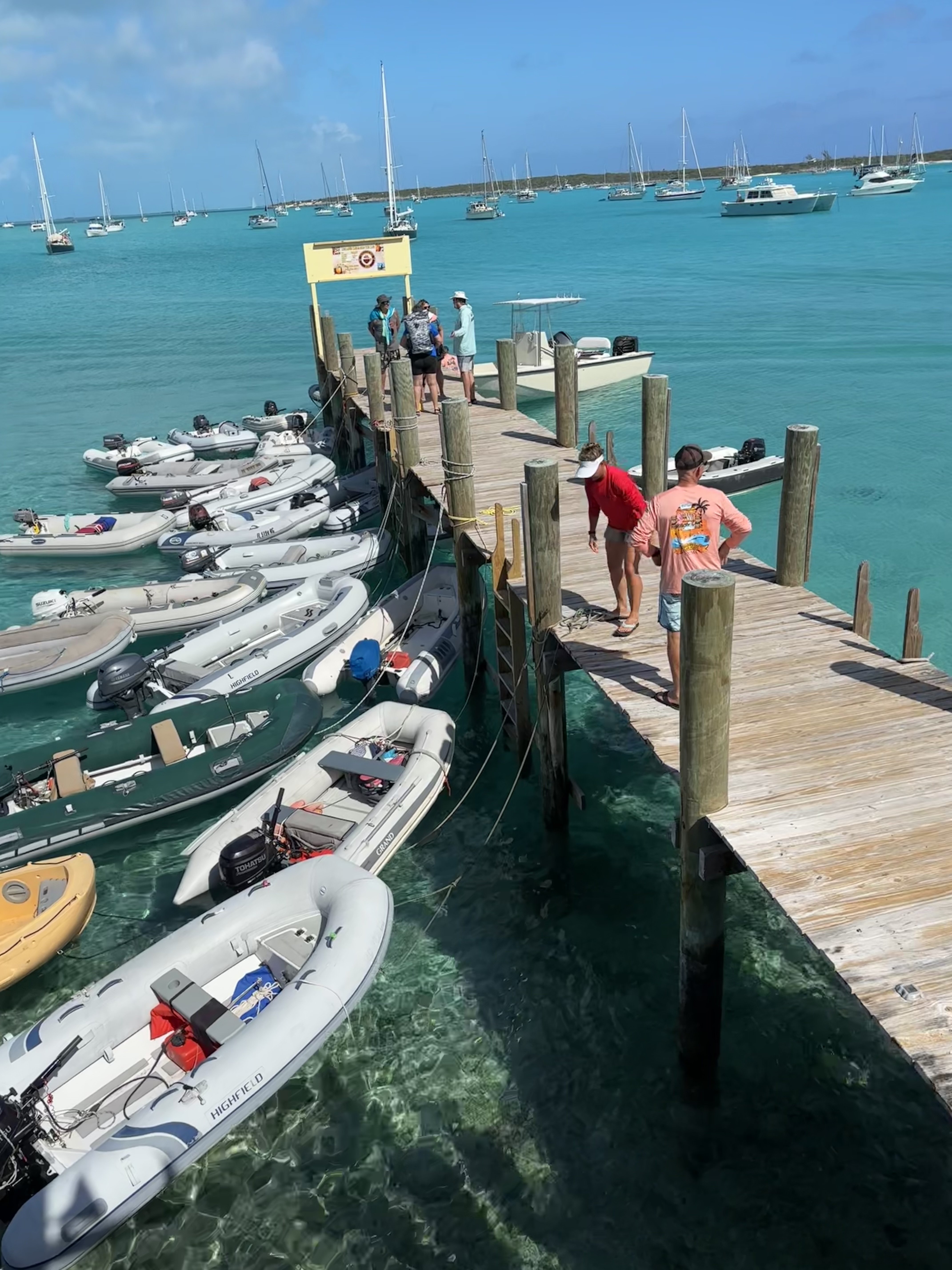
What’s the most common thing you hear about travel, boating, or even cruising specifically? What really makes cruising so special? The places? The boats? I’m sure you’re probably guessing where I’m going. What were you going to say? That’s right.
THE PEOPLE.
It’s the people that make it. You meet such incredibly diverse, interesting, funny, capable, courageous, quirky people while cruising. And, only by cruising do you meet such a wide range of people—from all ages, backgrounds, jobs, and cultures—with whom you can connect so immediately because of your bond over boats. That is, you have chosen to travel the world by boat and take on all the challenges and rewards that presents. The lifestyle itself creates an instant, undeniable connection.
This event, the last big item on our Maine 2024 list, a first-ever rendezvous of Outbound boats and their owners in Harpswell, ME, was no different. What made it? Say it with me …
THE PEOPLE!
August 2024
Three Islands in the New Meadows River, Maine
When the planning of this rendezvous was in its mere whisper phases—in the spring of 2024—Phillip and I had no idea what to even expect in Maine. Sure, folks can tell you about the gorgeous scenery, the succulent lobster and seafood, the hikes, the bikes, the friendly people, but you really have to go and experience it for yourself to truly get it. The glorious world of nature that opened up for us as we cruised through Maine could only be topped by a get together with a dozen other like-minded, incredibly diverse Outbound owners for a traditional lobster bake, boat rally, and fiercely competitive regatta.
The Outbound owners who dreamed this up—the notorious and now infamous Meg and Sandy aboard s/v Kennebec—were brave enough to invite a pack of wild boat owners to their family home in Maine in late August, 2024 for an Outbound rally.
Having never met anyone who had a “family home in Maine,” I expected to see a three story, glossy mansion with huge pillars in the front, eighteen foot ceilings, and perhaps lion sculptures on the porch, or maybe they’d be seal pups shooting water into a front-yard fountain (I have a vivid imagination), I was far more pleased with what I got—a comfortable, well-appointed, lived-in and happily used family home that offered the perfect backdrop for a fun, heartwarming lobster-infused get together.
When we first started pointing Ubiquitous toward the New Meadows River in mid-August of last year—after gorging ourselves on Portland, Camden, Boothbay Harbor, Bar Harbour, Mt. Desert Island and the like—we started chatting with our close friends and fellow Outbound owners, Leo and Diane, on s/v Orion. If you recall, Leo, was the Outbound owner who literally saved our very first cruising season on Ubiquitous back in 2021 when we were in desperate need of a new riser/elbow. Leo offered us his spare riser/elbow before even meeting us because that’s absolutely the guy he is. Leo has garnered such a reputation in the Outbound community—having met several other Outbound and other boat owners in the same manner, i.e., by offering them a desperately-needed helping hand or spare—that folks joke he has a spare for anything. “Need to change out your head? Go ask Leo, he may have a spare toilet aboard” became the running joke among Outbounders. With his heart of gold, smile of a thousand watts, and quick, adventurous wit, Leo is a standout in the Outbound community. Along with his wife, Diane, with her artistic flair, warm, welcoming heart, and never-ending thirst for “fun things to do,” the crew of Orion is always an enviable guest in boat gatherings.
Leo, Diane, me, and Phillip having dinner aboard Ubi after the raft-up.
Leo and Diane came up with the fun idea for the four of us—aboard Ubiquitous and Orion—to raft up for the first night in the New Meadows River and host a cocktail hour for all the Outbounders who came to the rendezvous. We were expecting 15-20+ people on each boat and the ideas for interesting cocktails, nibbles, host gifts, décor, etc. began to brew in the days leading up to the rendezvous. Diane is an expert party planner and she made découpage seashells for everyone as a parting gift. Phillip came up with the idea of a frameable map (of the area where the Outbound rendezvous was hosted) for all owners to sign and gift to Meg and Sandy for hosting. All told, the four of us—Leo, Diane, Phillip, and I—had a smashing time playing party hosts! The raft-up was a big hit and introduced us to a dozen more Outbound owners whom we now call close friends and communicate with regularly.
The next day, everyone gathered at Meg and Sandy’s place for a traditional lobster bake. This was the first lobster bake I had ever attended, and I had NO CLUE they would literally dig a hole in the ground for the fire and lay seaweed and a bed of fresh lobsters on top to steam right there atop the moist Maine soil. This country girl damn sure approved! Those lobsters were some of the best I’ve eaten in my life. And there were plenty. I think we each had at least two. Some had three! I’m not at liberty to say who, only that … it was worth it. ; )
The incredible team from Collection Yachts, who manufactures and sells Outbounds, also came to join us and brought every boat in attendance some custom Collection swag and goodies. Having John, Michael, Tate, and the entire Collection team in attendance made the event even more fun.
But, after the congenial festivities, we had to get serious. We all have sailboats for a reason, am I right? What is that reason?
Well, for men, it’s often … TO RACE! Ha! The third day of the rendezvous was devoted to an Outbound exclusive regatta around three points set up in the New Meadows River. There was some fierce competition—particularly in the startup—among the Outbound skippers with some strategic tacking, creative cursing, and somewhat-friendly heckling (lol), but it all ended in a sportsmanlike finish and great fun for all who sailed in the race. Although I captured a few quality shots during the race, the Collection Yachts team employed an incredible photographer—Cory Silken out of Newport—to come and photograph both the race and the rendezvous and put together a glossy, high-quality photo book from the rendezvous that every owner was grateful and humbled to get. What a memento from an unforgettable time with new and old friends.
All told, Phillip and I could not have sailed away from the Outbound rendezvous more fulfilled and excited about all the adventures we have ahead, both in our amazing boat Ubiquitous, and with our new set of hilarious, adventurous, resourceful friends. What more could cruisers ask for? Our time in Maine definitely solidified for us that we are spending our years wisely—among people who feel and think like us and are driven to savor every experience available. Cruisers are not afraid to get their hands dirty. They don’t let unexpected obstacles dampen their mood, or their drive. And, they simply have the best stories. Period. No matter how and where we travel, for Phillip and I, it will always be about the people.
And now for the true Maaaaiiinnne event. This was by far my favorite aspect of Maine: the hiking in Acadia National Park. While I had visions of what I thought hiking in Acadia would be like, I learned I really had no clue. Moss covers the ground like carpet. The peat and pine is all so rich, it’s a fragrance that surrounds you the minute you set foot ashore. The air is crisp. The temps are perfect (upper 60s/lower 70s for hiking), and the views are just jaw-dropping. While the lobsters and the seals and the quirky breweries and coffee shops and all of that make Maine a wonderful place to visit, the national park stole my heart when we were there. You got your hiking boots on? Let’s go!
August 2024
WoodenBoat
After we left Camden, Boothbay and the lovely Botanical Gardens, Phillip and I made our way over to Wooden Boat to anchor for the night and check out their boat-building facilities. Many of you are familiar with WoodenBoat Magazine. Well, this is where it all started. At the WoodenBoat boat-building school in Maine. Established in 1974 by Jon Wilson, the school—which welcomes boatbuilder, sailors, designers, and maritime historians—is dedicated to wooden boat design, building, maintenance and appreciation. Phillip and I were pleased to find students steaming big planks of wood to shape hulls and hammering cotton in as caulking, as we walked the facilities. We even got to see an old-timey boatbuilder melt and pour the bronze for fittings on the boat. Check out the cleat Phillip is holding. In all, the facility and skills they are teaching were impressive and eye-opening. We really enjoyed the visit, and their hospitality.
Southwest Harbor
After WoodenBoat we cruised over to Southwest Harbor to grab a ball at the Hinckley Yard. I discussed our efforts to spot and dodge lobster pots in my first Maine post if you’re curious. Our day-sails in Maine from harbor to harbor were definitely treated differently than a typical cruise for us, with both Phillip and I on keen watch for pots. We got lucky and did not hit any during our time in Maine, thankfully (although we have a cutter for that reason, that we never hope to need), but it definitely impacted how we weighed anchor and settled into our daily passages.
The Hinckley Yard had a nice mooring field where we were able to grab a ball and go ashore to walk some breathtaking neighborhoods. I saw a bunch of deer and bunnies in the morning when I would go walking and it was just an exquisite immersive experience.
One of the really cool things we liked about Mount Desert Island was also the Island Explorer Bus—a free bus!—that runs all over the island, even picking us up right near the Hinckley Yard. Phillip and I hopped on and off that thing frequently, taking it to various parts of the National Park, different trailheads and downtown areas. It was a fun, unique, and free way to enjoy the island.
And, we finally got our lobster on at Beal’s! I’ll never forget that first meal. I cracked and smashed and slathered every morsel I fished out in lemon butter. The lobster up in Maine just has a completely different taste—extremely fresh, sweet almost, and with a light, delicate texture. It was exquisite.
Somes Sound
Ahhhh … our first fjord. Well, I did learn they call it a fjard because, while it, too, is formed by glacial activity, it is shallower and less steep than a fjord. The Sound extends seven (7) miles inland from Southwest Harbor up toward Somesville, effectively splitting Mount Desert Island almost in two. This was probably our favorite anchorage area in all of Maine: Somes Sound.
There was just something about the Sound that felt so majestic and other-worldly compared to all the other cruising Phillip and I have done. With these big tall rocky cliffs forming the backdrop for our boat, the cool, rich waters we were anchored in, the colors that form the palette of Maine when I close my eyes (dark navy water, the mustard yellow of the moss on the rocks, and the lush green and grey rocky cliff of the trails above). Phillip and I anchored in several spots along the Somes Sound and found our view of the boat from the dinghy to be one of our favorite images of Ubi we’ve ever taken. Every shot looked like a poster.
We also climbed the Saint Sauveur Mountain overlooking Valley Cove. Translation: overlooking our boat! That was a really fun climb that took us most of the day—ironically because when we climbed all the way to the top then down to the bottom, we learned part of the trail was closed for renovations, so we had to climb all the way up again and all the way down. No complaints here, though. We were there for the hiking, so … c’est la hike. It was a glorious day spent in nature!
Acadia National Park is one of the most beloved national parks in the United States, known for its striking landscapes, rich biodiversity, and recreational opportunities. She certainly did not disappoint. I was impressed that every trail was so clearly marked and accessible to allow pretty much anyone who could walk the stunning views, fresh natural air, and peace and tranquility this place provides. Acadia was glorious! Here are some other peaks available for hiking, all from any anchorage on Mount Desert Island.
One of our favorite stops in Southwest Harbor was also the Common Good Kitchen, this quaint little breakfast bakery spot that is famous for its popovers. Yes, that’s a thing. An amazing, delicious, delicate thing.
But, there was even more goodness here. This little kitchen operates on a “pay-what-you-want” donation system designed to provide free, nutritious meals to locals and newcomers alike, while cultivating a sense of community and offering uplifting live music to island residents. Want a taste? Here you go!
Also, we had a buddy boat traveling with us who flew his droooonnnee, capturing these really cool shots of Ubi sailing down the Somes Sound toward Abels and Bar Harbor. Maybe the drone shots were one of the reasons the Somes Sound turned out to be one of our favorite spots in Maine. Just maybe.
Bar Harbor
If you want to get a glimpse of what if feels like to walk through a quaint little Maine town in the middle of summer: turn your AC down to 68 degrees, put on a light fleece, crank up John Denver singing Country Roads and eat blueberry ice cream. Minus the exquisite nature, that’s a pretty good replica. Bar Harbor was just as cute and quaint as Southwest Harbor (and Boothbay and Camden and all of them). But, one of our favorite stops was Abel’s for the looobbbstaaahs!
Delish. We anchored outside of Abel’s, too, at the tip of the Somes Sound and really enjoyed that anchorage. It was quite pretty and filled with several fun, fellow boaters whom we enjoyed sharing the loveliness with. From the Somes anchorage by Abel’s, we hopped back on the Island Explorer Bus and accomplished one of the coolest hikes in all of our Maine cruising. On Mount Dorr, they have a “rungs and ladders” trail—is what the National Park gal told me it was called. Check this out.
We were definitely very high up, but what I loved about the Acadia hiking is that it all felt quite safe and enjoyable—being able to climb up this high without a grueling, covered-in-sweat, extreme experience—while still getting some very pleasurable exercise and sunshine and the privilege of this exceptional view. I could hike an Acadia National Park trail everyday of my life and be happy. Every trail checked that many boxes for me. I found this pretty cool video that let’s you take the “rungs and ladders” trial vicariously. Give it a whirl and let me know what you think of an Acadia hike. : )
Glorious indeed, right?! That’s how we felt about all of Maine. Just stunning. Worth the lobster pots. Worth the cold water that I didn’t swim in (although Phillip did). Worth it all. The views, the rich biodiversity you are immersed in, the people, the blueberry everything. I loved every anchorage, hike, and morsel. But, of course, I’ve saved the best for last. Our last foray in Maine was an Outbound-boat rendezvous with a traditional waterfront lobster bake AND and an Outbound regatta. Holy moly. Stay tuned!
As we sailed further up the coast, Maine continued to unfold before us, each port offering its own unique feel and flavor of rich coastline, working harbors, and authentic New England.
While I could say it was all brought about by Ubi’s particular magic that we seemed to land at every port in the middle of a full-blown festival, I had to remind myself this far up in latitudes, these three months of summer are all they really get for sailing and cruising. It’s their high season. The rest of the year the place is froze over. Only the lobstermen are getting out on the water in those frigid temps and conditions. So, they really jam a lot of waterfront activity into June, July, and August. Lucky us! : )
July, 2024
Rockland
After leaving Portland, we headed further up north and I was surprised when I saw Rockland coming into view. It looked like a tri-county fair, with red and white striped tent peaks everywhere and tons of people packed along the waterfront. Like we had landed in a circus!
Completely unbeknownst to us, we had dropped anchor right as they kicked off their annual Maine Lobster Festival. And, these people take their lobster seriously. Trust me.
This five-day festival—which completely takes over Harbor Park on the waterfront—honors the state’s iconic lobster industry and offers a wide array of attractions. Think food trucks, games, nightly shows and music, even a petting zoo! Annie loves little baby animals. I just melt.
We were also really surprised and pleased to find the area had such a rich Portuguese heritage, offering lots of linguica—an incredibly flavorful, smoky Portuguese sausage, often served with sautéed peppers—usually on their famous Portuguese bolo (bread). We stuffed ourselves silly with sausage and had a great time roaming among the tents and watching the Portuguese dancers put on a nightly show.
One other very cool thing that we happened to land upon in arriving in Rockland was this U.S. Coast Guard tall ship and a Navy guided missile destroyer, the Delbert D. Black that were anchored in the harbor, available to tour. We never say no to touring other boats, be it a 35-foot little sailboat like the 1985 Niagara Hinterhoeller we used to sail, or a 513-foot destroyer. The answer is “Yes, please!” We hopped on a little fishing boat turned ferry for the day and got us a tour. The ship was massive, impeccably maintained, with plenty of midshipmen and sailors aboard happy to tell us about the systems and show us all the cool toys. Such a treat!
Rockland also offered a few little quirky breweries and coffee shops that made our visit there even more memorable. We anchored just outside of Harbor Park, which was a quick easy in on the dink, but Phillip and I were surprised at how much rode we had to put out to get a 5-to-1 ratio in about thirty feet of depth and how much swing radius that gave the boats in the anchorage. After getting too close for comfort to a boat who was there before us (Boat Code gives the first boat to anchor deference, in Annie’s book at least), we had to move and re-anchor. It was our first lesson in the trickeries of anchoring in waters that deep. This was one of the reasons, going further into Maine, we often took a mooring ball when one was available. While there is a daily fee, of course, it does alleviate, entirely, the worry of another boat swinging and hitting you. We found it a price worth paying. The balls also come with a launch which can be pretty handy in cold or drizzly, wet weather.
Camden
For this reason, when we made it to Camden, we decided to call first to ask if a mooring ball was available. And, what did they tell us? “Oh, gees, it might be impossible this weekend as it’s the Camden Classics Cup.” We said: “The what cup?” Being completely new to this port, we were a little befuddled. But, the Lyman-Morse guy came right back with some very good news. “We had a cancellation. Looks like you’re in. Ball M14 is yours.” We said: “Whooo hooo!” Camden here we come. And, I must include a little shout-out here to the mooring balls in New England, many of which (especially in Maine) are rigged with what I call—hope you speak Annie—a “pick-em-up stick.”
They include this little lobster pot looking floatie with a stick that’s tall enough for you to just grab from the bow. No boat hook—or leaning way over the side of the toe rail—to grab the ball. Just grab the pick-em-up stick, which is attached to the bridal that goes right on your bow cleats. They’re often piled up on the mooring itself, so they’re usually dry when you grab them and fasten them on the boat. For those of you who have wrestled a wet, grimy, gnarly mooring ball line onto your boat know what I’m talking about. You look like you went a few rounds with a pig in slop when you’re done. But, in Maine, I felt like I could grab a mooring ball up there in an evening gown and (aside from washing my hands) you’d never know what I just did. The pick-em-up sticks were a thing of beauty.
So, once we got on our Lyman-Morse ball in Camden, we wanted to get promptly ashore to see what all this Camden Classics Cup was about. Ooooohhh boy. These were some of the most beautiful, exquisitely maintained wooden boats I have ever seen. And they’re right there on the dock by Lyman-Morse, just asking to be ogled. The Classics Cup features a sailing regatta and harbor parade all in honor of classic yacht racing and boatbuilding. We got to see the parade that runs through the little harbor there (one of our favorite, picturesque harbors in all of Maine) and listen to the entertaining, and impressive commentary provided for each boat. Many of the boats that passed us by during the parade boasted numerous round-the-world excursions and many had been sailing the waters of this planet for almost one hundred years, if not more. I was mesmerized thinking what incredible things each of those boats have witnessed and survived! What a testament to boat building.
In all, the Classics Cup was just mesmerizing, particularly against the backdrop of picturesque Penobscot Bay. We even dropped the ball (again, very easy to do, even in a high society ensemble) and took Ubi out to bob and sail around and watch them race around us. It was an incredible day.
As was this! Climbing Mount Battie in Camden! This was one of our first tastes of hiking elevations in Maine and man, oh, man, what an exquisite treat. The ground is so lush and rich. I felt like the moss covering the ground was as thick as carpet. Every shade of green you can imagine. And, cool enough to need a light fleece at the start, but you shed the layers as you make your way up to the reward of such an incredible view. It overlooked the mooring field, so we could see and wave to Ubi from up there. Also, roughly 800 feet of elevation is nothing to sneeze at. It was a perfect way to earn an appetite for the many incredible restaurants Camden has to offer.
While the hiking on Mt. Desert Island, which boasts Acadia National Park, was our favorite—those stories and photos are coming here next!—Mount Battie, being our first taste of it, holds a special little place in this hiker’s heart. In all, Camden offered beauty, an eclectic shopping/foodie scene, and some of the most well-preserved wooden boats I’ve ever seen in person. Camden was one of our favorite stops in Maine.
Boothbay Harbor
But, our good-landing luck must have run out by then, because we hit Boothbay Harbor in the middle of dense fog followed by three days of drizzle and hard rain.
We didn’t see it as problem, though. The weather is going to do what it’s going to do. And, I took solace in reminding myself that’s how the earth gets so rich and green up there, the waters so clean, the air so fresh, because of the frequent fogs and rain. We stayed on a ball at Carousel Marina and they were very good to us. I enjoyed walking by this friend every day and saying hello.
Made me chuckle they have a huge rod propping him up in the back as I guess he’s taken a spill or two over the years. Seeing him laid back like he was going under a limbo bar would have been a funny sight to see. In all, Boothbay Harbor is a really picturesque stop in Maine with wonderful thick woods all around to walk through and a great little eclectic downtown full of shops worth poking into.
We had fun despite the rain, however, attending an interesting little science talk at the Opera House there and enjoying several fine dinners at both the Carriage House Inn and Ports of Italy. I also enjoyed the nostalgia of the footbridge—that has been around since 1901 if you can believe it?! Believe it. The footbridge made our frequent walks through town and around Boothbay Harbor even that more enjoyable.
Botanical Gardens
But, of course, I saved the best for last. This easily makes the top ten of the dozens of fun, memorable things we did while in Maine: the Coastal Maine Botanical Gardens. The gardens span over 300 acres along Maine’s midcoast and feature ornamental gardens all showcasing flora and fauna native to Maine as well as miles of trails that run through forests, wetlands, and along nearly a mile of Maine’s rich shoreline. After our stay in Boothbay Harbor, my official tour guide (Phillip) had planned for us to sail over and anchor near Indiantown Island so we could dinghy in and explore the botanical gardens.
While I was expecting beautiful flowers and lakes and trees, birds, and butterflies, and guided natures paths, I had no idea these lovely tree trolls were in store.
I tell you, I’ve been traipsing through the woods since I was about three feet tall. Proof! : )
So, a hike through the forest is always high on my list—skinned knees and all—but what we encountered in Maine just surpassed any forest or wooded environment I have ever had the pleasure (nay, privilege!) of walking through. These guys were a real highlight for me. Walking up to them you feel a bit of a presence. Like the big guy is looking down at you and wondering what stories you have to share with him, as he’s got plenty for you. They were quite majestic. Here’s the story:
These giant trolls (five total in the Botanical Gardens) referred to as “The Guardians of the Seed” were created by a Danish artist, Thomas Dambo. He makes these mammoth-sized trolls all from recycled materials. Great way to reduce, reuse! But don’t let me rattle on about the amazing trolls. Here’s Dambo himself on them:
The project was intended as an open-ended fuse that initiates wonder, inspiring people to see the natural world through a whimsically different lens that reinforces the value of using what we have to create something new, while also pulling together people of many skills and backgrounds from throughout our community.
So, check them out and let us know which one is your favorite! It’s time. Meet the Trolls!
Roskva Stands for the trunks
Roskva is the heaviest, hardest, and strongest of the trolls. Every day, Roskva climbs towards the sky, and every year she grows taller and wider. If a troll forgets something, they can always ask Roskva—she counts the seasons and remembers everything that happens around her.
Lilja Holds the scent of the flowers
Just last summer, Lilja came out from her hiding place. The youngest of the trolls, she’s still just a child. She loves the colors and the scents of the flowers and when bees and butterflies fly among branches.
Birk Holds the roots
Birk is the wisest and most mysterious of the trolls. He hides in the shadows and listens to the whispers of the soil. He knows everything that happens in the wild, and every day he tells tales to all the other creatures of the forest.
Søren Sticks up for the branches
Søren is a very curious troll; his head is always turning and twisting, searching for places ever higher. He dreams about drifting around on a cloud in the sky, and when the wind is blowing, he loves to celebrate with a dance.
Gro Smiles with the leaves
Gro is the wanderer. Every fall she disappears, but the trolls are not worried because every spring she returns to the forest. On her return, Gro walks around to make sure every friend of hers is fed. After hurrying to catch a few sunbeams and a handful of raindrops, she creates a feast for the forest.
We hope you’ve enjoyed this fun romp through a few of our favorite stops during our first summer in Maine, in and around Penobscot Bay. Next up, I’ll share our absolute favorite place that we visited in Maine this past summer: Sommes Sound and Acadia National Park. Stay tuned! This is the Maine Event! : )
It is that time followers. If any of you have ever been pondering cruising to Maine, these posts are for you. For those who have been to Maine, enjoy the nostalgia. While Phillip and I have been cruising for (gosh) over twelve years now, we spent most of that time cruising the west coast of Florida and other countries (Bahamas, Cuba, France, Portugal, Spain, etc.). We only started cruising the U.S. east coast in 2021 when we welcomed Ubiquitous to our salty family and fell in love with summers in New England during our first voyage there in 2023, although we’ve been back every year since. However, in aaaaallll those years cruising, Phillip and I have easily found our summer cruising Maine was our best cruising season after Cuba. That’s right. Maine came in second only to Cuba. True statement, for us. It was that incredible. It was that unique. It was that magical—despite the million lobster pots (don’t worry, I’ve included an Annie-style tutorial below). So, what are we waiting for? Let’s get to the MAINE EVENT!
JULY 2024
Rockport, MA
After catching the start of the Newport to Bermuda race in June, then making our way (for the first incredible time!) into the Cape and exploring Boston and Ptown, we finally started making our way up into Maine. On a side note, our sail up the coast was incredibly fun. I remember Phillip and I being excited every day exploring new waters and traversing to new latitudes—despite some occasional fog. We were often dancing to music underway, making fun passage treats, and enjoying the gorgeous coastline views from Ubi.
Phillip breaking a move on deck as we sailed north : )
Rockport, MA
Although, I know it is in Massachusetts, not Maine, I’m sure many will agree with me in that Rockport, MA—a self-proclaimed “seasonal village on Cape Anne”— FELT like our first port in Maine, because it has all the elements of a coastal town that scream Maine. What are those? I’m glad you asked!
1. A tiny little harbor filled with colorful, working fishing and lobster boats.
2. Exquisite Harbour views.
Ubi on her hook in the Rockport Harbor
3. A cute little touristy “Main Street” (a downtown strip) that is home to all the necessities: quirky art galleries, trinket shops, lobster bite bars (I call them) – little walk-up seafood bite joints with exceptional seafood, most of it caught that very day – ice cream parlors, souvenir shops, etc.
4. The Rockport Opera House was quite impressive, with a vast window bank looking RIGHT out on the anchorage where Ubi was happily floating. We tried to catch a concert/event here, twice, but they were sold out. Next time! What a venue! Check out their schedule here.
5. The typical upper England “beach” with its brown, pebbly sand, crisp waters, and folks splashing and sunbathing making you feel like a total wimp for feeling cold (although you can see their skin blistered pink from it):
6. I even found a fellow Parrothead in Rockport! Jimmy fans travel high and low.
The Water in Maine
We stayed in the anchorage at Rockport for a few days, taking in the quaint sights and scenes and enjoying the brisk air before making our way further north up the coast. And, I think this is the appropriate time to pay a little tribute to the waters of Maine, as they were just so different than any waters we’ve cruised before. The waters up north are teeming with life. They are not the warm, jewel-toned waters of the Bahamas (which I am looking at now as I write this) but they are equally essential and beautiful in their own right in that they provide such a lifeblood for the working class in Maine. Lobster boats putter out every morning in search of fresh crustaceans. The shores are filled with shells of clams and mollusks of all walks of life. The thick, slick yellow algae that covers the rocks at the water line is full of life. The water is deep, dark, and clean. Probably some of the cleanest waters we have sailed in (I can easily say that knowing how much time we’ve spent in south Florida and marinas).
The waters up north can seem dark and brooding, but I see them as full of life. I imagine if someone could snap their fingers and make the water disappear, leaving the organisms behind, you would find millions upon millions of species at every meter of depth, even deep into the rich, supple muddy seaboard. The water is such a sustenance there. It is revered and worked around. It has been lived upon for hundreds of years, generations after generations. I saw female lobster boat captains clad in orange rubber, hauling in their catches just like the guys and it made me proud. I saw scruffy old salts with steamy cups of coffee in the early hours looking out on the water, and I wish I knew what they were thinking and what they saw as they looked out. The fisherman and women who live and work in Maine, I can assure you, are a hearty, sage bunch. I admired their quiet solitude and their deep, ancestral connection to the water.
Mooring at Falmouth
Our first actual stop in Maine was Portland, which is quite an eccentric, progressive hub. Sailing into the harbor in Portland was a real treat. There were lobster boats, sailboats, big charter boats, cargo ships. It was very active. We decided to take a ball with Handy Boat (Maine’s “friendliest anchorage in the heart of Casco Bay” and I believe them) in Falmouth, ME. To answer several questions you may be rolling around right now, it was very common for us to take a mooring ball in Maine. First, they are everywhere—often infiltrating and taking over many anchorages near ports making them difficult to anchor around (so if you can’t beat them, join them! : ). Second, it’s often too deep to anchor comfortably close to the port you want to visit. This is not true everywhere in Maine. I mean, there’s over 3,400 miles of coast in Maine, but for the popular ports that most people visit (Camden, Booth Bay, Bar Harbor, etc.) we found it was far more common for people to grab a mooring ball than anchor, and they often come with a launch to shore which is nice. The balls are also all very well-maintained, too, so they offer a lot of comfort, ease, and amenities. The balls at Handy were no different, offering a great restaurant and laundry facilities ashore, with just a quick Uber ride into Portland.
Portland, Maine
Ahhhh … where to start. With the blueberries perhaps? Sure, let’s start there.
Blueberries rule the day in Maine. Especially in the summer. There are blueberry drinks, coffees, teas, jams, pancake mixes, scones, even blueberry candles, lotions, cups, books, you name it. If you didn’t see this book in any one of the hundred cute little book/trinket shops, I won’t believe you were really there.
I enjoyed blueberry beer, tea, coffee, and cookies. All were a real treat!
We also did the Duck Boat tour when in Portland. Phillip and I often do the cheesy tourist thing anytime we land in a port new to us. It’s a great way to get a quick lay of the land, some fun history, and we often make friends with the tour guides and get some local intel from them as a result. This time was no different. The Duck Boat provided some really interesting facts about the waters of Portland, its seafood heritage and history, as well as the cool architecture and ancient buildings we were roaming around.
We had a lunch at Eventide Oyster Co. that I still remember to this day. We savored the most exquisite scallops I’ve ever eaten while sitting right on a main thoroughfare of downtown Portland watching the tourists and locals alike walk by. We also got an oyster flight which was very fun, with little flags telling us where each oyster came from. The Prince Edward Islands were a huge hit! Lightly salty, a little nutty, and one of the freshest things I’ve ever put in my mouth.
Walking the streets and checking out the waterviews, the history, the incredible breweries and eateries was a real treat. Phillip and I were pinching ourselves finding it a little hard to believe we had actually done it. Sailed our immaculate, capable boat all the way up the eastern coast to Maine! I had never been there by car or plane. I only arrived by sailboat! That’s just pretty cool. We spent several days pillaging the city and enjoying the sights and scenes in Portland, as well as the amenities and views at Falmouth around the Handy Boat mooring field.
Some of my morning walks around the Handy Boat/Falmouth area I can close my eyes and still see. I was baffled that I was donning light fleeces and long pants in July, but I was. I happily was. There wasn’t a path, road, or coastline I didn’t want to walk. And, I won’t betray my first seal pup sighting here with a photo that wasn’t the actual one. When his (or her) black, knowing eyes turned my way and took me in, I felt seen. I felt like that seal appreciated that I was just a happy bystander, appreciating everything about his way of life. We just looked at one another for a long minute, and I knew—in that moment I just knew—Phillip and I would be coming back to Maine for many years to come.
Next up, we’ll dive deeper into Maine, taking you to Rockland, Camden, and beyond. Stay tuned!
LOBSTER POT TUTORIAL
As promised, I wanted to share some information about lobster pots that I wish someone had shared with me before we cruised up to Maine. Many (many!) people told us how bad the lobster pots were, how prevalent, how annoying, how troublesome, yadda, yadda. All Phillip and I knew was how much of a bear the pots were going to be. Maybe I’m grateful all those cruisers gave us such an awful account because it made Phillip and I appropriately cautious and nervous about the pots, which made them turn out to be a non-event for us, really. Know that we were incredibly diligent—keeping a dual watch straight ahead at the bow at all times possible and steering very carefully around them—which does affect the enjoyment of your day sails (and we did zero night sails for this reason), but they’re an inconvenience that is worth the reward. However, once I learned these basic tenements, I felt fine about the pots. I hope this helps some of you.
How to Identify the Notorious Buoy With Toggle (“Buoys with a Buddy” I called them):
First, let me share this article, which was the first one I found that finally dumbed it down enough for me to understand. Turns out “Annie Dumb” is lower than most levels of dumb. If any of you are like me, you’re welcome.
When you first see a thick bank of lobster pot buoys ahead of you, you’re going to panic. Trust me. They feel too cluttered to manage, too tight to get through.
But, once you start to eat them like an elephant (one pot at a time) they become manageable. So, let’s start at the beginning. We all know a lobster pot is really just a buoy marking a cage down below the water designed to trap lobsters.
What we fear is the gnarly rope that leads from the cage up to the buoy that we can catch in our prop and cause all kinds of damage, the worst result being one unlucky cruiser who has to dive into those frigid waters, knife in teeth, to rescue the boat. That’s not the day anyone really wants.
But, what really set me on edge was the idea that some cages have TWO floating pieces connected to them which are also surreptitiously connected together under the water. Like a couple holding hands. A buoy with a buddy. And the last thing you want to do is drive between a buoy and its buddy because that low hanging rope between them will snarl you every time.
These guys caused me nightmares. My thinking was: if I can’t differentiate which buoy has a buddy, i.e., those that are connected underwater to one another, I cannot navigate these menaces. This felt especially true when I believed these two parts (the buoy and its “buddy”, aka the toggle) were like 100 feet apart, and I would never know which ones were connected and which weren’t, making them impossible to safely navigate. But, once I actually started sailing in Maine and found that with the two-buoy pots—those with a “toggle” and a buoy—the toggle and buoy proved to be so close together you could NOT easily drive between them. Meaning, you would have to try really hard, and would likely not be able, to fit the beam of your boat between a buoy and its buddy (toggle). Also, the toggle and buoy (when a pot had both) were typically painted the same color which was helpful AND they were only ten or so feet apart, maybe twenty feet at times, but too close to make you feel comfortable motoring between the toggle and the buoy.
Maybe this is a basic, simple principle about lobster pots that everyone but me already knew? (It wouldn’t be the first time for this blonde). But, this little revelation was a game-changer for me. Now when I look out at a field of lobster pot buoys, I see buoys alone and buoys with clear toggles (“buoys with buddies” I called them) and I see a path through them as long as I go slow and pay attention. Like navigating a crowd, you will instinctually NOT push through a couple holding hands because you feel that they are a single unit, not to be divided, and you don’t fit comfortably between them for that reason. Buoys with buddies—being closer together than I had envisioned—presented themselves the same way to me, making the whole field of pots more manageable to me. It’s just a sea of people and couples. Navigate accordingly.
Which Side of the Boat to Put the Pot On
It is also important to try (to the best of your ability) to go DOWN wind or current of a pot if you can. How do you do this you ask? Again, I was pleased to find the buoys themselves really help you out here. When the wind and current are moving together, the buoy will point you where to go, i.e. on the downwind and current side of the pot. The stick itself identifies the safe path by simply pointing it out to you. I found going on the “pointer” side of a pot was a safe bet most of the time.
It can be a little trickier when the current is strong and it is opposing the wind (making the toggle stick straight up, or point all over, including the wrong way). In this case, you can look at the flow of water around the buoy to see which way the current is flowing so you can navigate down-current of the buoy. Think of it like looking at a navigational buoy, when you see one really leaned over and the water gushing around it, telling you which direction the water is flowing. Here’s an example:
If you see water moving around a lobster buoy the same way, try to go down current of it. The reason for all of this is that you leave the gnarly mess of rope and cage underneath the buoy UP current or UP wind of you reducing the chance that you’ll get blown or drift into it.
When In Doubt, Throw Her in Neutral
Let’s face it. No matter how much we all try to stare ahead and maintain attention, we’re human. We look away. We start talking, reading, singing, whatever. We get distracted. There’s going to be a moment when you look up and see a lobster pot is already bobbing down the length of your hull, or it just slipped underneath and popped out the other side. And, you’re thinking (pardon my French): Shit! Here we go. Remember, if you’re motoring, you can always throw her in neutral for the moment in hopes that you just pass over the pot without catching it. You’ll see it pop up behind the transom as you drift away from it, and you breathe a huge sigh of relief. Whew. Or, if you do catch it, at least you don’t catch it with your prop spinning at however-many RPMs which can cause more damage.
For this reason, sailing (as opposed to motoring) through pots can be harder (because you’re constrained by the wind in your navigation), but it can also be safer in that regard. If you do catch a pot while sailing, you will probably see a noticeable reduction in speed. We caught one down in the Florida Keys years ago and it knocked us from 6+ knots SOG down to just a little over 4 and we looked behind the boat and saw we’d caught a pot. So, the speed will tell you (if you don’t notice it on your own). And, sometimes you can get a pot unsnarled with just a boat hook and cold arms. Consider yourself blessed that day.
A Word on Prop Cutters
Know that we do have a cutter on Ubi’s shaft that promises to cut lobster pot lines before they can damage her prop, but we consider that insurance we only want to use if necessary. The first line of defense is our eyes on the road and hands on the helm. We’ve yet to test our cutter out, and I’m okay with that.
I hope this helps some of you who think a bit like me (I need special, elementary-level instruction that resonates with me, and I’m highly visual) and who are planning to sail to Maine. Do NOT let the lobster pots deter you. They are manageable and well worth the beauty and magic that awaits! More Maine to come. Stay tuned!
Now, I have to admit I am a hybrid reader (well, and listener for that matter). Fun fact: At about any point in time, I simultaneously have a book in progress on my Kindle, in hard copy, on Audible, and one that I’m writing as well. What can I say? I love stories. And, while I also love the feel and tangible page-turn of reading an actual book—and, most importantly, the ability to flip back and forth to refresh my memory on certain characters, dates, settings, etc.—I also love and appreciate the sleek beauty of the Kindle, particularly for the “hands-free” option. Hands-free you ask? Yep. Give that salty thigh of yours a little swipe of water (or a lick, I’m not above it) and the Kindle just sticks! Leaving my hands to hold on to the boat (if it’s a little sporty) or hold a drink and a bowl of nibbles. That’s a happy moment in Annie Land. I hope it is for some of you all as well.
We take a short break from our travel excursions—which are about to launch into MAINE for our first time ever, stay tuned!—to share this really cool SAIL Magazine article with you. Funnily enough, I’m actually floating happily in Maine while reading my Kindle for the cover shot below for the article. I had another great time collaborating with Wendy Clarke over at SAIL Magazine on this one: a two-part take on e-readers versus hard copy books. Although I am a firm believer in Book Swap Mojo (yes, that is a thing) and the thrill of walking up to a new marina book swap wondering what Pandora’s Box has in store for me—please let it be this guy—I scrounged around for some interesting and clever ways to expand your library on the Kindle for this article. Surprised myself, even, at the many options to scarf up FREE ebooks. Don’t miss out. But, inquiring minds want to know. Lay it on us, followers, what are you? An e-reader or hard copy?
This is going to be fun. So, this past summer Phillip and I ventured further than we ever have by boat. We took Ubi through the Cape Code Canal so we could explore all of Cape Cod before making our way up to Maine, which proved to be one of the very best seasons we have spent on any boat. And, we’ve been cruising now (since 2013) for about twelve years, so that’s saying something. Personally, I love me a big gay explosion and I was really looking forward to Provincetown, but I never expected Boston to knock my (Boston) Sox off! But, it did. We absolutely pilfered that city. I think that’s what you’re supposed to do. You ready to join us. Let’s dive in!
June-July 2024:
When we last left you on the HaveWind blog, we had experienced one of our most harrowing moments offshore, with the late Pam Wall’s wisdom there to guide us, while we were making our way up the East Coast for the summer. We ventured up to Newport, one of our favorite stops in New England, and inadvertently caught the thrilling start of the Newport to Bermuda race where I went all fan-girl on Cole Brauer. I hope she’s forgiven (or forgot about) me. Those were some good times. Little did we know much more was in store after we made our way to Onset Village, a lovely little town poised perfectly for staging up to go through the Cape Code Canal, and headed over first to Provincetown, then Boston and Quincy. Although it was incredibly hard to choose, we did it for you guys. You’re welcome. Here are our Cape Cod Top Tens (in no particular order):
I mean … it’s Boston. They’ve got the legendary Paul Revere, John Hancock, Edgar Allen Poe. There’s the Tea Party, the “two if by sea!” … all of it. Who wouldn’t want to dive in? Phillip and I typically book a walking tour in any port new to us, however, as it gives a good lay of the land, some local knowledge and recommendations, while also providing the cool history of the place. Boston’s foot tours certainly did all of that and more. I was mesmerized by all the history right around us. And, Boston itself surprised me being quite an impressive little metro hub but without the noise, crowd, and smell of NYC. Walking around Harvard University was a pretty cool experience, too. Being the oldest higher education institution in the U.S., it was much smaller than I had envisioned, but you can feel the academic crackle in the atmosphere. We poked around MIT as well and that was just as much fun. But, I think my favorite (big shock) was the tour of the old Boston Public Library. The architecture of it—which typically reveals the history—and the art inside, as well as the serene and somber feel of it made it a memorable stop for me.
“I’ll have what she’s having.” If a mermaid is ordering up, that’s what I would say. Phillip found and booked this for us, and it was one of the most fascinating things we did this past summer. For Provincetown locals and tourists, coastal preservation and cleanup is key. That is why they are growing beautiful organic oysters right in Provincetown Harbor. Because—did you know?—a single oyster (just one) can filter up to fifty (50) gallons of water a day. Talk about a neat freak. An oyster after my own heart. We learned this fun fact and a hundred more on this tour, where they trek you out barefoot to the very oysters themselves to point out all the cool little micro wildlife in the harbor and teach you about their conservancy program. This was a real eye-opening nature treat.
“Thank you for listening,” he said. This was probably the biggest highlight of Provincetown for me because I love performing arts. I love writing and journalism (obviously). And, I love Ari Shapiro! It’s too bad he’s gay. Such a hottie. Phillip booked this for me as a surprise—I’m a lucky gal: Ari Shapiro’s “Thank You For Listening” Cabaret. Ari was funny, elegant, raw, soulful. We also bought and read his book—The Best Strangers in the World—which I thoroughly enjoyed. Thank you, Ari, for putting yourself out there. We loved it! We also saw Dina Martina and thought we were going a little batty, but I’ve never laughed so hard. I think the strange factor is part of the whole vibe of Ptown. It’s jaw-dropping to say the least. I believe I could wonder the streets of Provincetown any June of my life and it would be a good month for me. The colorful shops, the characters that roam the streets, but the overall feeling of good natured people and love is palpable. It’s a heartwarming place to be.
Now, I’m not a baseball fan. I think it’s an admirable sport, and its history with Babe Ruth and Jackie Robinson and all that is really cool, but I can’t think of a single game I’ve ever watched beginning to end. That said, I loved this tour of Fenway Park. There’s so much history there. The stadium has been in that very spot since 1912, well over a hundred years! It’s the oldest MLB stadium still in use. Also, opening game at Fenway, do you know who the Red Sox beat? The New York Highlanders, later to become the Yankees! Whoa. With its Green Monster, the Pesky Pole, and its nostalgic atmosphere, I think I would have a great time watching any game at Fenway.
Although we did stay on a ball in the Boston Harbor (highly recommend), we also booked a slip for a bit at the Safe Harbor Marina in Quincy and were very pleased with the access and amenities it provided. First, although we all know Safe Harbor marinas are taking over the world, in our experience, they have been very well-staffed, clean, well-appointed marinas so I’m not complaining. The one in Quincy is no different. Also, the collection of restaurants, a brewery, high-end stores, even a convenient store surrounding the marina is really nice. And—huge bonus for just about any cruiser—there is a lengthy walking/biking path that starts right at the marina and weaves through golden fields and waterfronts that I enjoyed every single day. In addition, the Boston Ferries pick up at Quincy and offer drops at the Logan Airport as well as multiple docks along the Boston Harbor for a very affordable fare, typically around $5 each way.
Soaring 350 feet over Provincetown, this iconic structure remains the tallest all-granite structure in the United States. At the top you can see all around Provincetown Harbor and the Cape as well as Boston all the way over on the other side. This was where Phillip and I actually saw Boston for the first time as we went to Provincetown first before doubling back across the Cape to Boston. The wind and weather, right? Go where it takes you. The views from the top of the Monument were well worth the climb, and it was fun to see Ubi out there, floating happy along with the other boats in the harbor. We never miss a chance to get a selfie with Ubi. Who would?
Don’t you love when your plans feel like they’re all going to waste but you find out later they actually worked out better than you could have imagined? Listen to this. Phillip and I were making our way toward Boston around the Fourth of July timeframe with the goal of being on a ball in the Boston Harbor with the Fourth of July fireworks exploding all around us. However, when we arrived and asked for a ball to reserve, we were told they only had balls through July 2nd; we would have to leave our ball on July 3rd. We were disheartened but there was nothing we could do about it. “We’ll take it,” we said. But, when we came ashore to explore Boston for our first time ever, we learned from posters at the marina that the fireworks in the harbor were happening on THE SECOND. Our first time in Boston and Phillip and I found ourselves seated perfectly in the Boston Harbor with fireworks exploding all around us. It was a sight to behold!
I’ll let you in on a little secret. Shhh … [my blonde is real]. I thought a president’s library was literally the library of books he collected and kept in the White House when he was serving. So, when Phillip asked if I wanted to go see JFK’s library, I thought, “Okay, that could be interesting.” Turns out it’s way more than the books JFK liked, and it was fascinating. Located between Quincy and Boston, this library and museum is worth a visit. They have pieced together a riveting history of this man who was nuanced, wilder than I had realized, and tested at such a young age, but he proved himself to be steely, level-headed, and wise. The history about Jackie O. was equally fascinating, and the displays and interactive/immersive exhibits they have put together make the trip well worth it.
We ate tagliatelle, cannoli, linguini, carpaccio, anything else ending in a vowel. Perusing Boston’s famous Little Italy is a trip for the senses. You’ll smell marina and roasted garlic on every corner. Some of the old kitchen hands that come out wiping their hands on their aprons look like they’ve stepped out of time, from one hundred years ago, to make you your pasta. We feasted big at Prezza and finished every piece of pasta on our plates. And, no trip to Boston is complete without a visit to the lively and iconic Mike’s Pasty for lots of shouts and dings and pastries flying. I’m not sure I ever need to see another cannoli.
Where everybody knows your name! Again Phillip surprised me with this one. We were just strolling the lovely cobblestones streets of Boston, and he said, “Hey take a right here. Let’s check out this bar.” This bar … pssshhh was none other than THE BAR from the hit show Cheers. The place is packed with memorabilia from the show: photos, news clippings, clothes worn by the stars. I’m a sucker for Woody. It’s hard to believe he was so young when he landed that role! The smile on Phillip’s face was priceless as he ordered up a frosty beer and sat among so many others looking around all over the walls and ceilings with their jaws dropped. Can you hear it now: “You want to go where everybody knows your name!”
HONORABLE MENTIONS
There were a few other things that we would have liked to have done—and I’m sure we would have loved them—but we ran out of time. If any of you readers have had the pleasure of experiencing these activities, feel free to chime in!
The bike paths around Cape Cod, made out of the old carriage and rail trails that used to dominate the Cape, are really impressive—long and windy, weaving through gorgeous landscape. Phillip and I took a little shuttle over to the National Park huts along the bike trails and we decided we definitely want to spend an entire day next time biking those really cool paths. But, it’s always nice to have something you want to come back for, right? “Next time!” we say.
Cape Cod Rail Trail in Harwich, Massachusetts, 2014.
This would have been very cool. We saw all of the people gathering on the lawns along the Charles River, thousands of them. It was starting to rain and we had dinner reservations, but next time we would like to see the Boston Pops Fourth of July show. The Boston Pops are an offshoot of the Boston Symphony Orchestra and they play more accessible numbers like Broadway tunes, film scores, jazz, and patriotic songs. They’re best known for their Fourth of July show but their Holiday Pops concert in December is also a huge draw for Bostonians. The videos we saw with the light show integrated and the magnitude of it told us we would like to do it when? “Next time!” : )
In my typical HaveWind fashion, I had to do a ‘Twas the Night post to celebrate the holiday. (For fun, here are some super oldie ‘Twas the Nights from the HaveWind archives – you’re welcome! : ).
In blog time, Phillip and Ubi and I had just endured one of our most terrifying moments offshore (where Pam Wall’s wisdom was with us) making our way up the east coast back to New England for the summer. This moment—the centerpiece of my Christmas poem—was one of our favorite in the Long Island Sound before we made our way to Maine for the summer, which we cannot WAIT to share here. Phillip and I hadn’t really planned on being in Newport for the start of the iconic Newport to Bermuda race, but there we were, having landed yet again, simply by sailing when the weather allowed, in the center of all the fun! Hope you enjoy the holiday fun. Cheers followers and Merry Christmas!
June 2024:
‘Twas the night before the Newport to Bermuda race and all through Narragansett Bay, not a sailboat was stirring, not even a 40 J.
On Ubi, we’d hung our outfits for the race from her handrails with care, in hopes that a certain female ‘round-the-world solo sailor would soon be there.
Phillip and I were nestled snug up in the vberth, dreaming of super maxis sailing for all their worth!
The next morning we arose and donned our race day attire, eager to dinghy over to Fort Adams to see what all would transpire.
When out on the green there had sprung up such a clatter, so many sailors, fans, and admirers starting to chatter.
I saw old pilgrims marching and drumming with flags in tow, as well as children, adults, dogs, and picnic baskets packed full for the show.
Everyone was abuzz listening to the pre-race commentary, filling their arms with chairs, towels, cups, and anything else they could carry.
We met up with good cruising buddies: “Hey there Jeff and Irene!” And set up shop on the rock wall by the bay to take in the scene.
Boats with masts soaring above one-hundred feet, began to sweep by, dazzling us as they jockeyed among the fleet.
While we’ve seen Narragansett Bay filled with sailboats many, many times, the start of an iconic offshore race was something sublime.
Knowing every one of these impressive yachts—from extreme racers to cruisers—is setting off on a 636-nautical mile race, crowning some winners but no losers.
The boats invigorated us all with their strategic positioning visible from ashore, leaving us wondering what the conditions would be like for them once they got offshore.
As I took in the sunny June day, to my wandering eyes did appear, the person I was most excited to see here.
I lost control of my decorum, my humility, my manners, when I started screaming randomly at her.
“It’s Cole! It’s Brauer! I can’t believe she’s really here! She’s like every female sailor’s dream, she literally has no fear!”
“Stop shouting,” Phillip chided. “Let’s see if we can get near her booth, so you can meet her in person and not act so uncouth.”
As we approached the tent, I was astonished by the sight of her: a young, beautiful, athletic woman, all smiles and chipper.
If you didn’t know a thing about Cole and her incredible sailing feat, you would have approached her like a new friend meeting on the street.
She was so humble and friendly, taking time to greet each fan, that I wanted to shake each one and tell them: “You don’t understand!
Cole is the first American woman to sail single-handedly around the world, non-STOP all while being her true self: wearing fuzzy PJs, high heels (once), and colorful tank tops!”
Her eyes, how they twinkled. Her spirit and aura, so humble and merry. “Well, get in line then,” Phillip urged. “I wouldn’t tarry.”
Approaching, I was overwhelmed remembering Cole in her bulky wellies, flares thrusted out, crossing the finish line with pride from deep in her belly.
Yet, here she was right in front of me, a woman, sailor, daughter, friend, encouraging other women who face barriers to boldly transcend.
I wish I could say in her presence I had been elegant and smooth, but I was a bumbling, blithering fool, rigid and hardly able to move.
I did get to tell, Cole, though, that—to so many—she is such an inspiration, and she thanked me, smiled, and posed next to me without hesitation.
Then it was time for Cole to help start the race and blow the the first horn, and she shouted over the mic as if the act was something to which she was born:
“WE WISH YOU WELL SAILORS, MAY YOU KEEP UP A GOOD PACE. FAIR WINDS TO YOU ALL, AND TO ALL A GOOD RACE!”
She was tiny. She was big! She was excited and loud, but also soothing at the same time. An effervescent voice of wisdom. I’ll never forget the moment I first saw Pam Wall. She’d just had both her knees done, and she was slated to come on right after John Kretschmer at the Miami Boat Show in 2015. At that time—gosh, almost ten years now … ten?!— Phillip and I had only been cruising for a little over two years and had only sailed our trusty 1985 Niagara 35 from Pensacola down to the Florida Keys and back. That was some time ago. As Pam made her way through the folding chairs up to her place on the “stage,” several colleagues and friends in the crowd tried to help her walk through, but she shooed them away. “I’m proud!” she yelled. “I want everyone to see I’m not bowl-legged anymore!” And, then there she was. All five feet of her.
Pam was exuberant, happy, doing the exact thing she loved. The thing that pulled her out of her personal tragedies and inspired her to keep going: Inspiring others. Just like she inspired Phillip and I at that very show to—as only Pam can say it—“GO TO THE BAHAMAS!” And, just like with about everything else Pam told us to do, we did. I will forever be grateful for having the privilege of knowing Pam and calling her a friend.
There are several pieces of advice from Pam, however (in addition to what you should bring to eat on a trip: “Take. What you like. To eat.” : ) that have stuck with me over the years. Pam’s wisdom, her experience, and her ability to see adventure and excitement—even at her small statute—where others see terror and fear will never leave me, even though she has left this world and left many heartbroken, teary-eyed sailors in her wake. Just recently, I had her words come to me like a bolt of lightning, when Phillip and I were battling our worst conditions offshore on Ubiquitous. In sharing our worst moment offshore, I felt it fitting to share some of my favorite Pam Wall truisms as a humble but heartfelt tribute to a woman I looked up to like a mother. Pam, this one’s for you.
“Everything I worried about, never happened. So get out there and do it!”
I, myself, have repeated this one to many newbie cruisers over the years because it is 100% true. All the things I worried about when Phillip and I first started cruising—Phillip falling overboard, the boat taking on more water than it could expel, a fire aboard, a deadly medical emergency—thankfully, none of these have happened yet. However, many things I never would have dreamed of in a millions years (which means I never worried about them because I couldn’t fathom them) did happen. Just a few key ones come to mind: the time the Windex arrow slid up the VHF antenna threatening to snap it off, water spewing from the stuffing box, the rudder trying to drop out of the boat, the dinghy ripping off the stern rail in the middle of the Gulf. These are all things I could have never dreamed up, but what did Phillip and I do when they happened? Just like Pam said. We dealt with it. And, what did that do for us? Just like Pam said, it empowered us.
“Overcoming obstacles together is empowering!”
Everything Phillip and I have tackled together as equal cruising partners and boat owners has empowered us. And, there have been some doozies. The time we found rotten stringers under our mast and had to—as our buddy Brandon would say—“rebuild the backbone of our boat” which kicked off our YouTube Season 3 “Hard Times on the Hard”. When we hauled for that project, Brandon had a great time telling us “your keel’s falling off.” In jest. But, our keel seam was cracked and weeping, so we had to grind it out and Gflex it (for those skeptical, that bond is still holding eight years and hundreds of blue water miles later). Then there was the time our transmission was dripping fluid into the bilge and we had to capture it and pour it back in every fifteen minutes to get back to shore. And, those are just on the Niagara. On Ubiquitous we’ve had to deal with a riser elbow that was lost in the mail and almost required us to haul and wrap Ubi for the entire winter (what was slated to be our first winter cruising on her), not to mention us dealing with a second failure of that same part. The time we found the generator was water locked and would not crank. Then, the time Pam was able to help us sort out, when an unprecedented rainstorm walloped Ft. Lauderdale, swamping our dinghy on the davits and breaking them beyond repair.
Every obstacle Phillip and I have overcome in our—now, twelve years of cruising—have done exactly what Pam said it would. Each obstacle empowered us. Yet again, I will say it. Thank you, Pam. And, I will share her favorite picture of me (her words) because she loved to see women sailors really getting in there, grabbing the helm, grabbing a wrench, and getting elbow-deep in the workings of the boat.
So, how did Pam’s words of wisdom come to me just recently when we were miles offshore battling the conditions? And, more importantly, what words were they?
May 24, 2024:
The shelf cloud that was forming around us was daunting. It was intimidating. No matter how strong I know our boat is, no boat, anywhere, is a match for Mother Nature. It’s just a fact. After overcoming the failure of our riser/elbow in February in Jacksonville, FL, Phillip and I started making our way up the East Coast to spend the summer once again in exquisite New England. Phillip and I left Charleston in late May expecting fair conditions of S/SW winds of 10-15 that (we hoped) would push us nicely up the Gulf Stream and around Cape Fear toward Wrightsville Beach, or Beaufort, or Cape Lookout where we could stage up to round Hatteras on the next leg. Our repeated weather checks in the days before had also forecast the least chance of thunderstorms on the day of our departure. Everything was going smoothly into the evening. We had been sailing most of the day—with the full main up and a poled out genoa, making 7.0 knots avg SOG—and we were preparing to ease into our night shift routine. Phillip and I do two hours on/two hours off during overnight passages beginning right after dinner. Spoiler alert: we didn’t make it to dinner.
As we still had cell signal, Phillip was getting pings on his phone around 5:00 p.m. notifying us that Charleston was getting hammered with severe thunderstorms bringing 60 knot winds and hale up to one inch! We hoped the storm over Charleston would pass south of us. It did not. Right around sunset (of course!), just as we were losing visibility, the ominous shelf cloud appeared, allowing me the perfect moment to share the one and only photo I took during this whole ordeal:
Checking the radar, we saw two other storm cells: a small, but intense cell that appeared it might pass behind our stern as well as a larger cell coming off of Cape Fear that we hoped would head across our bow and then offshore. We learned later: they did not. All three storms converged on us.
The winds started to increase to 20 knots into the evening, which is not uncomfortable on an Outbound 46 if you have the right sail plan. With the genoa poled out and the main fully up, we were flying, making 8 knots SOG which was plenty (or, more likely, too fast) considering what we were sailing into. We decided to furl up the genoa that we’d had poled out. Like Pam had taught us, we had secured the pole independently with a topping lift and a fore and aft guy and clipped the pole around the working sheet NOT (“NEVER!” Pam would say) to the clew of the sail itself. Doing it this way, we could furl the sail while leaving the pole out completely secure and worry about putting the pole away another time when the conditions were calmer. Phillip suggested at this time that we put the pole away and Pam’s voice came to me.
“Know your boat!”
I know putting the pole away on our boat is a bit of a process. Not that it’s risky or overly laborious, but it takes some coordination between Phillip and I to release all the lines, walk the pole toward the bow and steady it while the other crew member simultaneously lets out the topping lift to lower the jaws end of the pole while also raising the other end of the pole that is attached to the mast to bring it back to its position clipped to the mast. This process takes some balancing on both of our parts to ensure the pole doesn’t fall or bang (crack) the deck and that no fingers or persons are injured in the process.
Knoooowwwing all of this, I was quite hesitant to start that process with the storm building all around us, the seas were kicked up to 4-5 feet now, with heavier winds and lightning coming. I worried taking the pole out of its currently secure position would leave us in the middle of the process, hands occupied, our balance precarious with everything we would be juggling, and something worse would happen—a wind shift, a big wave, a bolt of lightning—I didn’t know. But, because I knew my boat I vetoed the idea. Knowing the boat equally well (if not better) Phillip immediately agreed and also decided we should not worry about the pole but, rather, reef the main down to its second reef, to which I readily agreed. In all fairness, anytime Phillip starts to think about reefing, I had already considered it fifteen minutes prior and I always agree to reef. Knowing this about me, he usually waits until he’s confident we need to reef before suggesting it. It bothers me none that I am a reef often, reef early/less canvas is usually better sailor. Every day of the week I am.
Of course, during this exchange and decision-making process, the winds had increased to the upper 20s and the sea state continued to get more chaotic. And, of course, as soon as we decided to reef the main, it started to rain. Before executing the reef, Phillip and I got our PFDs and tethers out and did a double check sweep below to make sure everything was stowed sufficiently. We decided to crank the engine so we would have him warmed up and at the ready if we needed whatever extra propulsion or steering control he might be able to provide. Heading topside in the wind and rain, I clipped in and prepared to heave the main down as Phillip eased the halyard in the cockpit.
As is always the case, the conditions felt more extreme topside in the wind, which always makes me grateful for the protection our boat provides us from the elements—even just wind protection under the dodger. The shelter and quiet and calm it provides compared to outside-in-the-elements brings immense comfort, but stepping out into it, feeling what the boat is powering through while protecting us always humbles me. As I looked back to Phillip in the cockpit a huge bolt of lightning cracked nearby, the bright pink light it created contrasted to the dark scene before, temporarily blinded both of us and we both worried, for a brief second before our vision returned, whether Ubi had been struck. When my vision came back and I saw Phillip’s face, lit by the glow of the chartplotter before him, a wave of relief washed through me knowing we hadn’t been struck. At least not yet. In that moment, in my full foulies, clipped to the mast of my gallant boat who was battling the wind and rain for us, Pam’s voice broke through again:
“Don’t Be a Passenger!”
Know this, Pammy: I damn sure wasn’t. Not in that moment. It was me and Phillip and Ubiquitous against the elements. We had our sea savvy, level heads and healthy bodies, and one of the most capable boats I have ever set foot on. We were all three equals out there, taking it on as a team, and I knew Pam would be proud. I got the main down and cinched in the second reef and headed back to Phillip in the cockpit as the winds only continued to increase up to 32, 33, 35 knots and building. I went below and put all the handheld electronics in the oven to protect our lifesaving devices if we did suffer a strike that blew out the electronics or VHF on the boat. It was approaching 10:00 p.m. and we had been battling this storm now for several hours. Phillip and I were both cold, wet, and hungry, but there was no choice but to stay focused and keep the boat on course. With the second reef in, the boat was surprisingly well balanced and holding well. We were still going faster than we wanted to, making 8-9 knots approaching Cape Fear, but Ubi was handling the conditions incredibly well. We were just hopeful we were finally pulling out from under this gnarly storm, and that the storms overhead would finally begin to dissipate. They did not.
As the three thunderstorms converged and intensified above us, the lightning started to crack every 5-10 seconds. It was so dark outside and the lightning so close and bright that every time it lit up the sky and deck of the boat, it was so bright both Phillip and I were blinded momentarily and worried the electronics had been blown out with every hit. It would take us a second or two—each time—for our eyes to adjust and see that the chartplotter was still in fact showing data to assuage our worries that Ubi had not been hit. Not yet. This continued for another 30 or so minutes as the winds began to increase to 40, a number I never want to see while sailing my boat offshore. We hoped that would be the end of it. It was not.
Phillip and I watched horrified in the cockpit as the winds increased from 40 to 43 to 45, 46. The storm was not done with us yet. I remember hearing someone yell “THIS IS HAPPENING!” and I was surprised to find it had been me. We were heeled so hard on our starboard tack that I feared—as I often have—that one of the shrouds was going to explode or rip out through the deck. This is one of the things I seem incapable of following Pam’s advice on, because I have feared a shroud breaking since Phillip and I started sailing in 2013. Has it ever happened? No. But—as much as I try, Pammy—I can’t seem to not worry about that one. But it didn’t happen this time, either. Here’s what did happen.
The winds increased, upward and upward, to 50 knots. I know many sailors have been in conditions just like this, if not infinitely worse, but we had not. Fifty knots of wind—which is closer to sixty mph—is more than Phillip and I have ever experienced offshore, even during our two ocean crossings. Watching it all, I was mesmerized how Ubi held her course. She did not round up. She did not tack through the wind. Miraculously, she held her course and just, pardon my French, but charged the fuck through. I’ve never been prouder of her, or of us. Phillip and I had remained calm. We’d done what we thought was best to prepare our amazing boat for it. Then it was all Ubi, and she did her damn job. And did it well.
After that horrific gust, the storms seemed to finally decide Ubi was a more formidable opponent than they had calculated, and they began to retreat. Finally. It was nearing 11:00 p.m. by now. Phillip and I still laugh looking back on this incident, when we both saw the winds had dropped to 35 knots, and we were like “Oh, whew. It’s only blowing 35 now.” Perspective, I tell you. Is key. Once the winds started letting up, however, and Phillip and I could take a breath, pat ourselves down to make sure we were okay, then check topside to ensure the rigging and mainsail had survived just as we had hoped. Phillip, however, found we did have a problem. With all the racket and chaos of the storm, we hadn’t heard it, but—somewhere in the middle of it all—our engine had stopped running. The panel was still on, which was a good sign, but it had just shut itself down for some reason. Probably not a good one we thought.
Phillip and I tried to re-crank several, times with no luck. It would try to turn over repeatedly but would never fire. It had power, thankfully, which meant the engine had not been struck by lightning. We checked all the wires and connections to make sure something hadn’t simply rattled loose during the chaos. Everything appeared fine. We checked our fuel levels. On Ubi, we have four diesel tanks, spread out underneath our feet in the raised saloon floor, where they serve doubly as important ballasts for the boat. We had been on a forward tank which is smaller, but it still had at least 10-20 gallons of fuel left. Plenty to crank. We followed fuel lines, as best we could, trying to see if one had been compromised or disconnected.
Remember, this is nearing midnight, and we’re both recovering from being drenched and frigid. Phillip and I shoved granola bars in our mouths while we continued to work the problem and make sure Ubi was still sailing just fine in the winds that had leveled out to the mid twenties and staying on course. In hindsight, I’m still amazed at how patient and capable Ubi was during this whole ordeal. Phillip and I were both tired and frustrated and wanting the whole thing to be over, but we stuck with it. We did not want to have to limp on without an engine and have to call for a tow to shore, but if it had to be done, we knew it was an option. But, we wanted it to be our last option.
We shut the engine’s sea cock so we wouldn’t continue to pull water in trying to crank, knowing we would open it immediately if the engine did turn over. Knowing our generator had suffered a waterlock from raw water having come back into the engine, I was worried the same had somehow happened to the Yanmar when we had heeled over in the 50-knot wind. That was my biggest fear, but I hoped I was wrong. Looking at the engine’s oil and finding it was not milky as I had suspected, I was immediately relieved. The sound the engine was making in trying to turn over sounded like a fuel problem, like the engine couldn’t get enough fuel to combust and turn over. I liked that theory better than the waterlock, so we proceeded on that. Phillip thought it through and surmised we may have been so heeled over that the intake into the smaller fuel tank might have lifted out of the fuel and created an air bubble in the system that shut the engine down. It was a good theory. One we operated on as we set to work trying to bleed the system.
On our old boat, the Niagara 35, our Westerbeke was self-bleeding, which was nice. It would automatically push air out during the crank process—until it was all bled—and then turn over. Not so with our Yanmar. It does have a manual air pump on the secondary fuel filter (not the big primary Raycors) that you can push manually to push air out of an open petcock. We tried that numerous times, dozens upon dozens of pumps with little squirts of fuel out of the petcock, but no dice. The Yanmar would not turn over. We poured through manuals and kept trying, as we eased into the next day exhausted and frustrated but thankfully sailing on course around Cape Fear with no injuries or other severe damage that we knew of.
We were dry and protected, so it was simply worrisome and troubling, but not terrifying or deadly. We kept at it. We decided to try to turn the engine over (with the sea cock closed) but this time with the petcock open until we got a steady, robust spray of fuel out of the petcock. That was a fun, messy job for Annie—I was not a passenger, Pam!—but we finally got a rock solid spray coming out that Phillip and I were hopeful had finally solved our air problem. We cleaned the fuel spray up as best we could, and we prepared to try to turn the engine over again, this time with Phillip at the sea cock ready to open it immediately once the engine turned over. We crossed our fingers, held our breath, and …
Shouted raucous bursts of joy when our engine turned over. “WHOOOOOO HOOOOOOOOOO. YEEEAAAAAAHHHHH. WAAAAAAYYYY TO GO YANNICK!” I got hoarse from yelling. Our engine, a Yanmar we lovingly named “Yannick,” after the French captain with whom we crossed the Atlantic back in 2016. Why? Because they’re both unbelievably hearty (said with a cheese ball French accent, hhhuuu-hooouh : ).
It was 1:00 a.m. by this time. Phillip and I had been battling the storm and then the failed engine for going on … seven hours by now. But, having endured that intense wind and sea state, with hundreds of bolts of lightning all around us, and air intake in our engine, Phillip and Ubi and I had done it. We had come out the other side, with all systems working and our magnificent, strong boat powering around Cape Fear sailing us to our intended destination. It was a miraculous feeling. One that was only bolstered when we were rewarded with an exquisite sunrise as we sailed toward shore.
The bolstering only continued as we arrived, exhausted, humbled, and grateful, in Wrightsville Beach, only to find a fellow sailor who had been in the same conditions as us, but who had been struck by lightning, losing both engines on his catamaran, and had to be towed in only to drop the hook and await significant repairs. That just as easily could have been us. I don’t know why it wasn’t this time, and I’m confident it could be us another time. The only determining factor between our two boats out there was luck. That’s it. How’s that for humility?
But, our takeaway was huge. We had done it. As a team. And, Pam’s advice had never rung so truly and resolute. The things I had worried about—a shroud exploding, Phillip falling overboard, a deadly emergency—hadn’t happened, so I shouldn’t have worried about them. I pushed them aside and went sailing anyway. The thing I had never worried about—our engine heeling over so much, the engine could suck in air—did happen. But, because we knew the boat and we operated as equal crew, not Captain and passenger, just as Pam had told us, we overcame the obstacle. And, guess what.
It was so fucking empowering.
That was some colorful language, there, Pam. But, I think you would approve. We are all sailors after all. I dedicate this one to Pam Wall, a shining light and unforgettable voice among sailors, particularly women sailors. She was a beacon, a joy, and an inspiration to thousands.
Pam, we all miss you. And, next year, we’ll do again what you have always told everyone to do, as you did us during our first ever Pam Wall Seminar.
“Everything I worried about never happened. And everything that did happen, when we took care of it, just felt so empowering. So don’t worry about it. Get out there and do it. The biggest thing is, don’t ever be a passenger. Because if you’re a passenger, you don’t understand things. You don’t understand your vessel. You’ll get frightened. But if you know what to do for those situations, if you can toss a line and make it get to where you want it to go, if you can steer the boat and if you can dock that boat, you will feel so empowered.”
New faces? Try 150 boats anchored at Black Point, Exumas for the OCC Rally.
New places? We fell in love with Chub Cay, Cambridge Cay, West Eleuthera, and Briland.
Same Bahamian Fun: Think traditional sloop races, fire dancers, kiting, snorkeling, piggies, Pauline the Mermaid, Stefan the Savage, and so much more. Let’s dive in!
Feb-Mar 2024
After our 2024 cruising season started with a bang, we were grateful we had a spare riser/elbow to snap into place and keep on trucking. We left the city dock in Jacksonville, FL where we’d accomplished our emergency repair and started dotting down the Florida coast to St. Augustine and West Palm Beach before making the jump to the Bahamas. We found ourselves in Chub Cay by Valentine’s Day and were most definitely feeling the love!
Chub Cay
I will say, before this year, I believe our favorite island group in the Bahamas was the Berries. Phillip and I had spent time in Frazer’s Hog Cay—where we met the infamous Steve and Pat who built a house there and live part of the year. Steve and Pat also enlightened us to Whale Cay and Bird Cay and the beautiful blue water and exceptional snorkeling and spearfishing there is right around Frazer’s Hog Cay. We also really enjoyed Great Harbor Cay, where we spent a good bit of time and kept Plaintiff’s Rest when Hurricane Dorian struck in 2019.
However, Phillip and I had never stopped at Chub Cay before so we were excited to try it this year, both as a new check-in spot, a new safe harbor for bad weather, a new marina, and … what we didn’t expect … our new favorite pool in all of the Bahamas. That’s a pretty bold statement, trust me, as Phillip is a complete pool fanatic and a bit of a pool snob, understandably so when you see the pools he’s frequented. With its infinity edge overlooking the ocean, its massive swim-up tiki bar, great tunes, incredible people watching, and full food service pool-side, I couldn’t get Phillip out of there. Mainly because I, myself, wouldn’t leave, but that’s not the point.
We also booked a dive with Chub Cay Divers, who took us around the shelf side of Whale Cay and along the outskirts of the Berries for some exceptional diving. We saw a massive lobster. His head was bigger than mine! We also got to see a shark with some “new jewelry” (our dive master, Ana, explained). She had a hook with a line hanging out of her mouth. Guess she showed those fisherman who was NOT ready to be caught. We also met some really fun folks (Boris and Angela) that we hung out with poolside post-dive. We ended up spending about seven days at Chub to wait out some weather, but it was the perfect, easy, laid-back entry to the Bahamas. We will definitely be back!
ScreenshotScreenshot
Cambridge Cay, Exumas
We then made our way into the Exumas as we had something you should never have on a boat folks … a schedule! For shame! For the first time ever, we had a friend flying into the Bahamas to meet us: our good friend, Bridgett, whom I’ve mentioned here at HaveWind before. We initially met Bridgett during our weekly forays (and let us never forget our famous Boozer Cruiser parties) at Ft. McRee near Pensacola and we’ve been enticing her to fly out to come visit us on Ubi ever since we started cruising the east coast in 2021. She joined us in Newport last year and the Bahamas this year. We had coordinated her trip to the Bahamas to coincide with the OCC Rally in Black Point which turned out to be a fabulous idea.
Before Bridgett arrived, however, we ventured into new territory for us in the Exumas. Previously, the furthest we had dipped our toes into the Exumas had been to Highbourne Cay and Warderick Wells, which is a stunning land and sea park, immaculately preserved, with lots of hiking and snorkeling. This time we stayed on a mooring ball by Emerald Rock near Warderick Wells and really loved that area. We also met some incredible new friends there who we stopped to talk to when we saw their haling port was Milton, Florida (that’s about 20 minutes from Pensacola). “Small world!” we shouted at them as we dinghied up. Rick and Terry in their Fontaine Pajot, Rogue Angel, became fast friends. We spent time with them exploring Cambridge Cay (an exquisite island), floating around in Rachel’s Bath, snorkeling Rocky Dundas, kitesurfing (they made exceptional kite groupies), even swimming with sharks at Compass Cay! I swam and kicked a lot harder than everyone else with the sharks, but I did get in (and tried my best not to pee … too much!).
ScreenshotScreenshot
Black Point, Exumas
This was going to be our first ever OCC Rally to participate in as well. Phillip and I have really enjoyed being members of the OCC group. The contacts you make and connections all over the world—all with helpful knowledge and a helping hand (or sometimes even a safe harbor) to offer—have been an invaluable asset. We were also thrilled to be reuniting with OCC members and long-time friends and fellow Outbound owners, Leo and Diane, at the rally, who sailed in on their 2021 Outbound, Orion. We got to meet up with some other friends from Milton, FL—Louis and Heather on s/v Viking—as well, and the five of us went to see the piggies (such a treat!) and snorkeled Thunderball Grotto with Bridgett. It’s stunning in there. Even prettier than most of the Bond girls, except Halle Berry (she was the best, don’t argue : ). And, last but not least, we also ran into Josh and Jessie at Black Point aboard their gorgeous 1979 Kelly Peterson, Ling Ling, whom I recently wrote about in SAIL Magazine. It was a time for reunions!
And, the party the Bahamians threw for the Rally! Lordy! There was dancing and a DJ every night, a pizza party one evening (Lorraine’s group made over 100 pizzas if you can believe it!), and a fire dancer and bonfire another evening, a mini-Junkanoo parade, etc. And, that wasn’t even the real event. They brought in traditional Bahamian sloop racing boats and Phillip and I got selected to help race on them. Meaning, crawl out on the plank to be “rail meat” or hunker down low and get the heck out of the way as the boom came flying overhead. Our team (the Lethal Weapons) beat Phillip’s. Sorry, Phillip. Those are just the facts.
We also met some incredibly interesting people there at Black Point. Pauline the Mermaid (we called her because it seems as if she glided right out of the ocean). She was a solo sailor, a singer, a guitarist, a lyricist, a songwriter, an adventurer, and just a gentle, wise soul we had the privilege to meet. She hosted a mini-concert one happy hour during the OCC Rally, and even a boat-side, dinghy-up name-changing ceremony for us all to enjoy. Bridgett and I sang our hearts out (much to Phillip’s chagrin). Then there was Stefan the Savage, a wicked kite surfer from South Africa who literally could not put his kite down. If the wind was blowing 9 knots, he was out there trying to make anything work, often crashing his kite and haling for rescues, which is how we met. If it was blowing a steady 15+ knot breeze, though, Stefan was out there tearing through the anchorage jumping over dinghies and flying high. He was a happy mess. Think Tigger on a kite. Such a joy!
In all, the weather for the OCC Rally was superb. The turnout out was exceptional. Over 150 boats bellied up to Black Point for the festivities. And, Lorraine and her daughter and mother all helped with the events, one of which was a reed weaving contest – very exciting! The fire dancer also really wowed us. I am always awed and humbled by the creativity of the Bahamians, how they create costumes, decorations, and so many everyday things we take for granted out of things most people would throw away or recycle. We spent a wonderful five days with Bridgett and the other OCC attendees before the party wrapped. Then it was time to start slowly making our way back home. Not before we stopped in our NEW favorite spot in the Bahamas, however.
Screenshot
Eleuthera (Cape Eleuthera, Hatchett Bay, Glass Window, and Briland)
After the OCC Rally, the weather really turned. Many boats were looking for protection from a wicked front that was coming. A dozen or more tried to hide near Big Majors with little luck as we heard the winds flipped several dinghies and caused some serious injuries. We sailed over from Black Point with Leo and Diane on Orion (yes, they beat us, we’re not racers) and hunkered down in a small anchorage to the north of Staniel Cay, which was a very pretty, secure anchorage. The four of us enjoyed a super swank dinner at Fowl Cay—one we can only afford once—before making our way to Cape Eleuthera. This was another new marina for me and Phillip, which definitely wowed. They have beaches on either side for sunrise, sunset, and several little restaurants. We went kite-surfing on Sunrise Beach and Leo even caught some actions shots of me with his drone!
Phillip and I had also never explored the western coast of Eleuthera. We had really only ventured through Spanish Wells and Harbour Island before, which we did love. Spanish Wells was probably our favorite island of all for a while, as it offers so much Bahamian authenticity, while also providing so many amenities (great restaurants, an exceptional grocery store, as well as boat parts, supplies, and services) and one of the prettiest beaches on the north shore. So, it was a real treat to explore Hatchett Bay this time—a very protected anchorage on the west coast—with Emmett regaling us every night with his Bahamian originals. Don’t worry, if you can’t make it to Emmett’s bar, you can hear him from the boat!
We also anchored near the Glass Window, which we had never done before. You’ll remember I got quite injured the last time we were at Eleuthera at the Queen’s Bath. Needless to say, we didn’t do that one again. But, the western side of the Glass Window was just stunning, serene and protected, with so much to explore by dinghy. Back at Spanish Wells, Stefan the Savage showed up and we had a great time kiting and spearfishing. Phillip and I kited our brains out and indulged at Papa’s Scoops (the local ice cream hole) as a reward. Then we made our way over to Harbour Island, known locally as “Briland.”
I think both Phillip and I had forgot how much Briland has to offer. Much like Spanish Wells, while it has its fair share of upscale restaurants and marinas, it also offers 100% authentic Bahamian culture, food, and activities. I liked sitting at the tiki hut by the water watching them make conch salad—heaps of it! The locals play dominos there and do their laundry as the same place we do. There are a lot of little shops and stores where the Bahamians are selling their handmade trinkets and wares. But, you can also venture toward the Atlantic side (with the pink beaches and horseback beach riding) and enjoy some incredibly upscale food options and the views! My god. The Atlantic beach is flat as a pancake for miles. It’s just breathtaking. Phillip and I anchored near the Ramona marina and really enjoyed our time there.
After Briland, we trickled up into the Abacos to frequent some of our favorite spots. In Hopetown, we met up with Bob, best known to Pensacola, FL cruisers as “Babaloo,” whom I’ve mentioned here before. That place is such a little gem, with its cute protected harbor, great shops and restaurants, weekly trivia at Cap’n Jacks, and the views from the lighthouse. Hopetown never disappoints. We stopped in Little Cay as well to visit with our friends Tom and Christy from Pensacola, before we zipped through Guyana Cay (for some Nippers fun!) and ended up at Green Turtle Cay with Rick and Terry again to round out our 2024 trek through the Bahamas. No venture through the Abacos is complete for these Pensacola sailors, however, without stopping at Allans-Pensacola Cay and leaving our name on the signing tree … again!
In all, it was an exceptional Bahamian cruise, filled with new faces, new places, but—are you ready for it?—the same ole Bahamian fun. We’re excited to gear up to head back to the Bahamas in 2025, with plans to delve deeper into the Exumas and the Raggeds! Are you coming?
When the Editor-in-Chief at SAIL Magazine—the talented and creative, Wendy Clarke—reached out to me about writing one of their Boats and Their People articles, I immediately knew what boat I wanted to feature: the capable, comfortable, proven cruising vessel that is a Kelly Peterson 44. I also secretly (although it’s out now ; ) wanted to collaborate with this adventurous writer and fellow cruiser I had met a few years back who boasts the perfect name for a sailor/world-traveler: Jessie Wilde! Jessie and her husband, Josh, live aboard their 1979 KP 44 most of the year while cruising and working remotely (for NASA!). Their boat is named Ling Ling, which means “very beautiful” in Mandarin. And, she is just that. You’ll see.
Josh and Jessie also undertook a daunting but exceptionally rewarding five-year refit of Ling Ling when they first purchased her back in 2015. Want to know more about their extensive refit list? I know you do! Be sure to pick up a copy SAIL Magazine’s October issue and check it out. I’ve included some more fun photos of Jessie and Josh and the impressive refit for their boat below that didn’t make it in the article, as well as a fun shot of the four of us together on Ubiquitous taken in the Bahamas this past spring. Us salty crew gotta stick together. Jessie, it was a real treat, and I’m thrilled with the way the piece turned out, much thanks to Wendy and her keen editor’s eye and unique touch. Thank you again to SAIL Magazine for sharing this incredible boat and her amazing “people.” Writing this piece was pure joy. : )
We last rendezvoused with Josh and Jessie at Black Point in the Exumas this past year when we were there for the OCC Rally in March of this year. Blog on our 2024 season in the Bahamas to come. Before that I believe we connected with Josh and Jessie in St. Augustine and West Palm Beach, Florida, and I know we will see these adventurous two again on the water next year. It’s a small cruising world out here. They are always wildly fun to be around, with tons of almost unbelievable stories, helpful insights, and inspiration. Jessie, Josh, thank your for collaborating with me on this piece. We can’t wait to see you two—and Ling Ling!—again soon!
Me, Phillip, Josh, and Jessie catching up in the cockpit of Ubiquitous at Black Point in the Exumas, March 2024 – good times!
Some more fun photos of Josh, Jessie, and Ling Ling both pre- and post-refit. Enjoy!