Podcast Interview about Our Voyage to Cuba

Hey hey HaveWind followers!  A real treat for you here.  Crazy Annie, at it again.  I get so excited talking about our wicked sail to Cuba I can hear myself running out of breath.  It just bursts out of me.  This is my first podcast interview post-Cuba, talking about our sail across the Gulf of Mexico and the Gulf Stream to Cuba as well as the repair process we went through at the shipyard to be able to make that voyage and some discussion of our Atlantic-crossing in 2016.  I think I talked Jeffrey into interviewing Yannick.  I know you’ll be excited to hear from our faithful French captain!  I hope you enjoy this conversation.  Thank Jeffrey Wetting with Shooting the Breeze Sailing Podcast for putting this together!

CLICK HERE TO LISTEN TO THE PODCAST

podcast

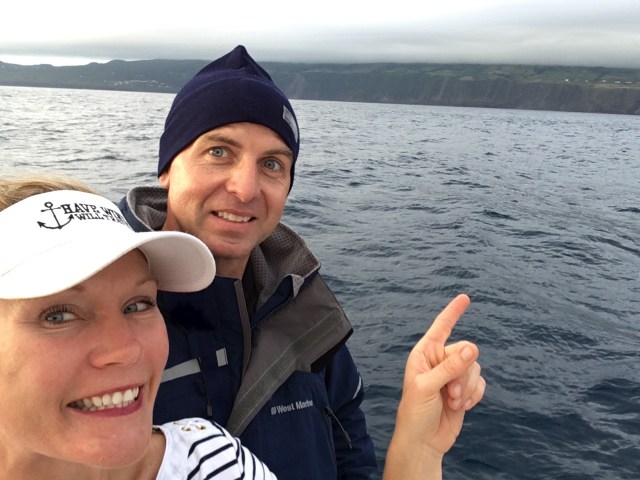
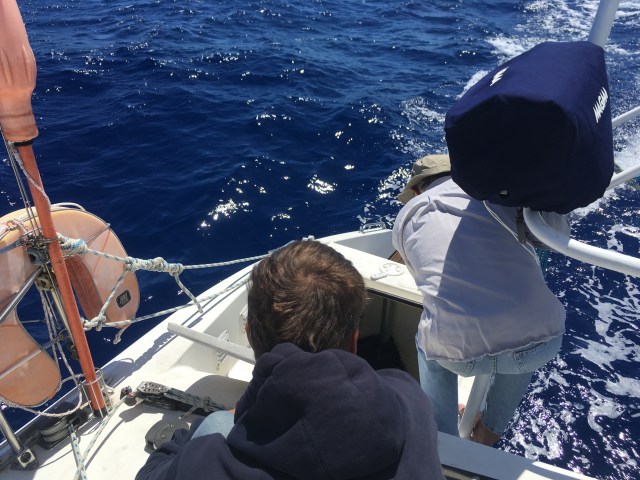
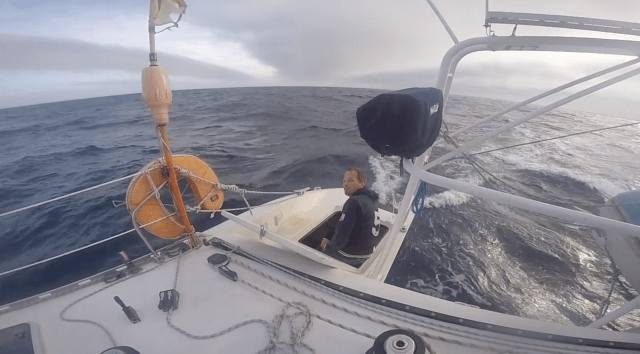
And cracks me up in the photo Jeffrey chose of me for his website.  Looks like there’s a crew member behind me on Libra puking over the side.  Ha ha.  While that is not far-fetched when you Sail on Libra, that was Greg Spivey (hello Greg!) just leaning over to film the waterline with his GoPro.  Hilarious what it looks like he’s doing though.  Way to go Jeffrey!  : )

#88: 30 Days Across the Atlantic (Season Five Premiere!)

Friends, followers, Merry Christmas and Happy New Year from HaveWindWillTravel!  A real treat for you here, available for the first time to my entire audience: my two-hour movie from our trans-Atlantic.  For those of you who are new, Phillip and I had the good fortune to be invited as part of a four-member crew to cross the Atlantic, sailing from Florida to France, this past June on a 46’ catamaran and I created my first full-length film documenting our journey.  I thought it would be a great way to kick off Season Five of our YouTube channel which will be all about our TRAVELs, with our biggest voyage of 2016!

When Captain Yannick first met me (which was around the same time he agreed to let me make this tremendous voyage with him, brave guy), he had no idea who I was really, the kind of videos I made, my audience or how I might portray him and his family on film and, because he has plans to produce video documentaries of his own someday, he initially asked that I not share the movie publicly on YouTube.  Now, after having watched many of my videos, particularly the movie itself, and with a better understanding of the purpose of my platform (to help share the realities and rewards of a cruising lifestyle) Yannick graciously granted my renewed request to let me share it with my entire audience, for free on YouTube.

So, kick back, make some hot cocoa, round up the last of the Christmas treats and enjoy the show while Phillip and I explore the vast historic castles, churches and smoky cigar holes in Cuba and work to get videos to you all from this incredible adventure as well as my sail to Isla Mujeres, Mexico this past November and our upcoming sail to Miami in February for the Miami Boat Show (we hope to see some of you there!).  Thank Captain Yannick for inviting Phillip and I on this incredible voyage and letting me share the experience with you: a crew of four on a 46’ foot catamaran, thirty days at sea across the Atlantic Ocean.  The perfect way to kick-off HaveWindWillTravel 2017!

Why We Travel

“There’s something magical about the Azores,” Phillip told me well before we stepped foot on Andanza to cross the Atlantic.

img_2223

When the idea first started to flick like a candle flame in our minds that we might sail across an ocean this year, Phillip immediately started to overflow with what little he knew about the places we might see along the way: Bermuda, the Azores, Peter Sport Café.  Now, this was long before we knew Yannick did not plan to stop at any of these places.  Not a one.  But it didn’t matter.  While Phillip and I love to see new places and explore new shores, we also love the journey in between.  Simply crossing the ocean was enough for us, but Phillip and I are both so grateful that things worked out the way they did and we had the opportunity to spend nine colorful, captivating days in that magical place known as the Azores during our voyage across the ocean.

Discovering new places, people and cultures by venturing off the main thoroughfare down obscured alleyways, in rumbling rickshaws lead by locals who have walked those roads barefoot since they were a child is why we travel.  I expect to feel the same kind of wanderlust awe as we traverse Havana, watching old Chevies putter by, following puffs of smoke from women on a balcony, wandering around with my mouth hanging wide open because I’ve simply forgotten all about it in my wonderment.  That sounds a little Alice in Wonderland but that is how I feel when we step onto a new shore: exuberantly overwhelmed and proud to be just mad enough to have embarked on the journey I did to get there.

Would you tell me, please, which way I ought to go from here?”

“That depends a good deal on where you want to get to,” said the Cat.

“I don’t much care where–” said Alice.

“Then it doesn’t matter which way you go,” said the Cat.

“–so long as I get SOMEWHERE,” Alice added as an explanation.

“Oh, you’re sure to do that,” said the Cat, “if you only walk long enough.”

maxresdefault

Where do you want to wander to?

As Phillip and I spend these last days preparing for our voyage to Cuba, my mind for some reason keeps traveling back to the Azores.  Probably because it, too, was a place where I could have never imagined myself because I simply could not imagine it.  I couldn’t see the colors, the lushness, the curiosity of the birds that ate my bread crumbs until I had actually been there.  It was even more magical than Phillip could convey and I thought I would take a moment to share it with you as I believe the culture and untouched parts of Cuba will strike us the same way.

Azorians wake every day to the sight of the Atlantic Ocean.

img_2107

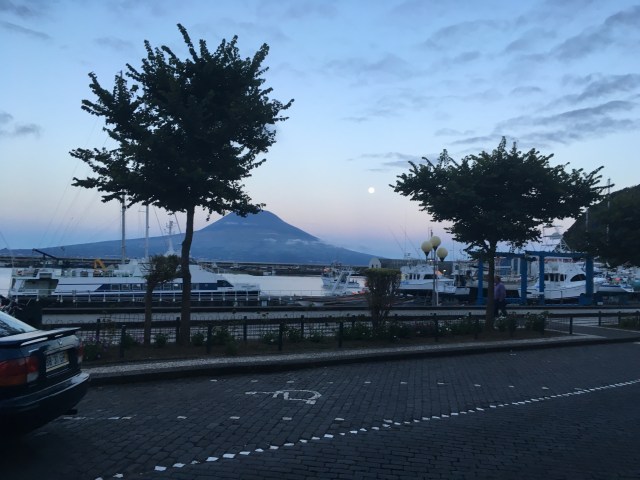
The peak of the Pico, basked in pastel looks upon us on the island of Failal.

img_1927

Each day began at this colorful café over coffee,

img_1844

and often ended with wine at the same table.  I love the ever-changing view from my office.

img_1877

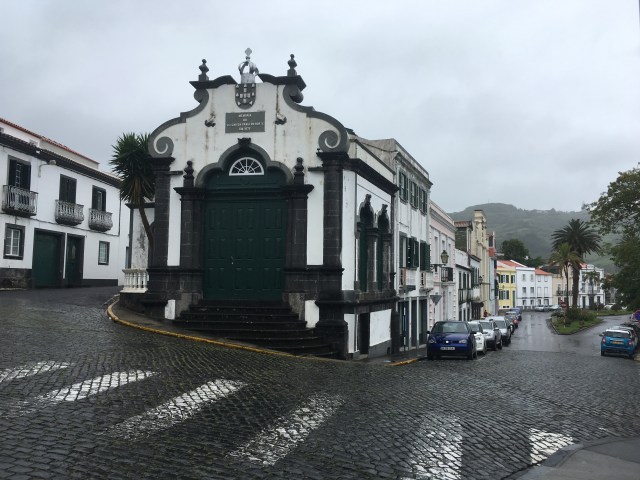
Cobblestone streets and centuries-old buildings scale the steep hillsides.

img_1968img_2417img_1995

I stumbled upon this while walking the streets one afternoon alone, a local wedding, held in the back patio of a home.

img_2426


The sea wall, with its many ship’s badges and boats, is a nautical museum.

img_1984img_2031img_1799 img_1803

Yannick, chatting with a French family cruising on their Ultramar as the father added their emblem to the seawall.

img_2035

There is a feeling of connection when you find badges from fellow sailors who have come before you, s/v Testarossa which won the ARC Europe 2016 race and the infamous Pam Wall’s Kandarik which came through in 2006.

img_2007img_2403

I found beauty everywhere.

img_2415 img_1915img_2423  img_2048

Final resting place overlooking the vast Atlantic.  I don’t think I would mind ending up here.

img_2420

En route to the farmer’s market where we brought fresh produce each Tuesday, fresh fish on Fridays and a fresh baguette every day.

img_1862 img_1960img_1970

Every meal was a delicacy.

img_2370img_2268

But don’t get me started on the cheese.  I could a do an entire post about cheese in the Azores.  It was all made locally from the very cows you see roaming the hillsides.  Each island made their own special breed and blend of cheese and cheese came to your table, no matter where you went, moments after you sat down.  Ahhh … the cheese.

img_1931

Voted, hands down, our favorite meal in the Azores: Octopus Salad drizzled in lemon, oil and fresh cilantro.

img_2372

The best way to spend your day?  Simply go for a walk.  Explore.  See.  Soak it all in.

img_2093  img_2124 img_2139 img_2263 img_2307 img_2376   img_2344 img_2087

You see?  Magical.  I don’t know if I will ever find myself again, in a cloud.

img_2226 img_2384 img_2389

This was a moment that stuck with me.  We often stopped at this little cafe on Porto Pim and this man was there every time, nibbling on cheese and bread and just watching, everything, everyone, quietly.  He was such a fixture at the place, the birds would come up and eat out of his hand.

Peter Sport Café.  What can I say?

img_1935

Peter Sport Café was a destination all its own.  There is an energy in that place that fills your lungs when you walk in the door.  You know you’re breathing the same air a thousand other sailors drew in before you having themselves just crossed an ocean to get there.  Respect—for each other and for the ocean—resonates with every man’s eyes you meet.  And when you and your crew come in to the Café for the first time, having just docked your boat on the historic seawall, pulling off hats, wiping salt from your brow, slapping each other’s shoulders, you make a bit of a scene because you’re energized by what you have just accomplished.  The folks who come there every afternoon for a beer or the folks who have been in the Azores for weeks, likely having work done on their boat, can spot you instantly: the crew that just made it in.  But, once you stay a few days and have a few beers there, you will start to blend into the regulars and you’ll smile when you see the next motley crew of sailors, walking in for the first, slapping shoulders and pulling off hats.  Congratulating your crossing with a drink at Peter Sport Café is a memorable experience.

I hope the first drink Phillip and I have in Havana brings me the same air of comradrerie with people there who have rich stories and experiences to share.

ATL CRX Lesson: The Decision to Stop

“Do what you would do if the kids and I were with you.”

This was probably the best advice I could imagine anyone giving Yannick in the moment.  He was really wrestling with the decision of whether to pull out of the Atlantic and into the Azores to see if we could get the auto-pilot on Andanza repaired or to keep making way hand-steering toward France.  As it stood, we were about a day and a half away from the Azores and about eight or nine days away from France with four capable, albeit a little tired, crew.

screen-shot-2016-11-17-at-11-15-23-am

This crew member, in particular, is a little crazy.  Dancing at the helm is the absolute best way to hold a hand-steering shift.  

We weren’t even sure, yet, whether the auto-pilot could be repaired in the Azores and Yannick was rightfully leery of docking his 46-foot catamaran.  That was one of the primary reasons he wanted to cross the Atlantic Ocean non-stop. And, now he was debating doing it in a port that may be of no help to him with a crew that had only docked the boat once before.

“There are less variables out here,” I remember him saying.

thumb_img_2714_1024

On the other hand, the crew was growing more tired with each two-hour shift and we were still many, many miles from France.  When Yannick reached out to his wife, who was “singled-handing” her own rather daunting journey—impressively juggling a move halfway across the world into a new home with two very small children in tow—Clothilde gave him the best guidance I believe any wife could in that situation and I will forever admire her for it.  Although she wanted Yannick home, she needed him home, Clothilde told him to act as if she were there with him so he would make the safest decision.  Hearty are the French.

10400575_25040140779_5729_n

While I would love to say this softened and persuaded our Captain, apparently the French are also stubborn as Yannick was hell-bent on getting his boat across the ocean as safely yet efficiently as possible.  While he did want to make the best decision for everyone, he also did not want to stop.  I believe even Yannick will tell you, what finally swayed him was a rather stern discussion with Phillip, ever the Marine, who felt it was time to step up and say something.

img_1558

“You have no reason to risk the boat.  That’s what I told him,” Phillip relayed to me later as I was holding my shift at the helm when he and Yannick had their discussion.  “We have plenty of time to stop for repairs, the weather doesn’t look any less favorable a week from now and, by stopping, we’ll make the last leg of the voyage with a rested crew and, likely, a fully-functioning auto-pilot.  There’s simply no reason that justifies the risk.”

“But you guys said you could do it,” Yannick said.  And he was right.  We did.  Because we probably could.

screen-shot-2016-11-17-at-11-17-25-am

“But that doesn’t mean we should,” Phillip told him.  And he was right too.

screen-shot-2016-11-17-at-11-18-10-am

Phillip and I have experienced this phenomenon on occasion during a passage.  It’s usually not one thing that goes wrong that puts the crew and boat in immediate jeopardy.  It’s usually a series of events.  Mostly minor in the beginning.  Just a small failure or some system that gets finicky, requires your attention and must be monitored, adjusted or repaired more often.  Nothing major just something that strains you a little, and then another that strains you a little more.  Then the weather turns gnarly.  It’s hard to see or navigate.  Then another system starts giving you trouble.  And before long, you’re much more tired than you realized.  You haven’t been sleeping or eating as well as you had before and THAT is when something bad happens, perhaps because of a poor decision you made because your judgment has been weakened or perhaps just because it is the next bad thing that was set to happen and now things are more than you can handle, particularly in your tired state.  For Phillip and I, it seems this is how you find yourself in trouble out there.  Not usually from one catastrophic occurrence, but a series of them, one after another until you can no longer control the situation.  I remember discussing this recently with Andy Schell and he agreed.  As he has far more many miles under his hull than we do,  I believe it to be true.

Were we fine at the moment?  Hand-steering in two-hour shifts with a capable four-person crew?  Yes.  But it was the first in a sequence of events that could have occurred.  It was the start of a series.  And Phillip—wanting both himself to have a safe and enjoyable journey across the Atlantic, but wanting more to see his friend Yannick sail his boat safely across the ocean—took decisive action to try and stop the series before it began.  “There’s just no reason to risk it,” he told Yannick.  While we were essentially strangers when we signed up as crew for this passage, over the course of each blue mile, a friendship grew and I know Yannick appreciated Phillip’s honesty and perspective.  By that point, Yannick trusted and respected Phillip and I think, looking back, he will say it was the right decision, although that did not make it an easy one.  After the men emerged from what I was told was a pretty tense conversation in the cabin, the Captain decided Andanza would be stopping in the Azores.

thumb_img_2607_1024

It seemed fate agreed with us as it wasn’t long after Yannick made the decision that I was able to get the folks at Mid-Atlantic Yacht Services on the satellite phone and, without much hesitation at all, they said with confidence they could either repair or replace Yannick’s electric RayMarine auto-pilot.   They kind of chuckled at me asking so many times.  The crew of Andanza had yet to be awakened to the wide range of serious boat repairs MAYS tackles on a daily basis.  It makes sense.  It’s the first big marina folks come to after 2,000 nm across the Atlantic Ocean.  I now know we all underestimated their capabilities because we did not yet know the state many boats are in when they reach the shores of the Azores.  We met sailors there who had lost their forestay, cracked their boom, had two feet of water in the bilge, on and on.  Our auto-pilot failure was child’s play to them.  Laughable almost.  It’s no wonder the MAYS folks were chuckling at me.

“Yes, we can fix your auto-pilot.  Yes, I’m sure.”

screen-shot-2016-11-17-at-11-16-12-am

“Okay we’re coming!”

While we hated it for Yannick.  None of us wanted his boat to suffer issues and for him to have to put his ocean-crossing on hold for repairs, but once the decision was made (through no fault of ours), I think each member of the crew will readily admit he was very excited to dock in the Azores.  Phillip told me before we left Pensacola he had heard other sailors say there is something magical about the Azores.  Sharing a drink with your seasoned, salty crew at Peter Sport Café, walking the docks littered with insignia from the hundreds of boats that have come before you and looking out in every direction at the vast blue of the Atlantic.  Now that I have seen it, I wholeheartedly agree: there is something magic about the Azores. Up next on the blog, I will share all that magical place has to offer.

img_2033

But first, landfall!

“Is there a troll down here?” I remember Phillip asking me.  I was sleeping in my berth when we made landfall.  I peeked my head up out of the hatch and saw it on the port side.  Thick lustrous trees.  Mountains.  Houses with little red tile roofs.  A whole hillside looking back at me.  I instantly thought of what we must look like to them.  A weathered, salty catamaran making our way in to port.  Tired and weary we were no more, though.  The sight of land invigorated the crew!

img_1748 img_1752 img_1763 img_1768 img_1771 img_1775

Phillip had the GoPro in hand and I’m so glad he captured this moment.  Yannick cracks me up.  Twenty-one days at sea, thousands of miles of nothing but blue, our first sighting of land and the Captain says …


Skype with Capt. Yannick

If you have seen our Atlantic-crossing movie, I know you want to meet this man.

14079561_10154444500872528_454063724646270371_n

We’ve had so many followers and Patrons ask me so many questions after watching the movie: “Why non-stop?”  “Why did you have so much trouble with the engines?”  “What other spares would you have brought?”  All valid questions that Phillip and I are happy to answer, but who better to ask than the Captain?  Yannick definitely loves to talk about his boat and the lessons learned from the Atlantic-crossing and he has graciously agreed to offer up some of his time to share those with you, my followers.  He is a very interesting man, with many diverse talents and pursuits and I’m excited for you all to get to know him better.

So, here’s the deal.  We can only handle so many on a call.  Just like the Patreon Skype session with Phillip and I discussing the Atlantic-crossing, we will open it up to the first ten folks to sign up.  First come, first serve.  Reach out to me in a comment below, or on Facebook or via email.  GO!  I will record the Q&A session like I did last time and share later with you all here so everyone will get the benefit of the discussion.  Also, I will share with anyone who signs up to participate but who has not yet seen the Atlantic-crossing movie a link to view the movie for free so you all can watch it over Thanksgiving (while I’m voyaging to Isla Mujeres!) and start deciding what you would really like to ask Capt. Yannick about the voyage.  You can also rent the movie ($2.99 on YouTube) here or Patrons get free viewing. The call will be Thursday Dec. 1st at noon, CST.  (As Yannick is seven hours ahead, this seemed to be the only reasonable overlap of time that wouldn’t force him to give an interview at 2:00 a.m. his time.  My hope was that any 9-5’ers who wanted to participate could take lunch at your desk and jump on the call.)

Thursday, Dec. 1st at 12:00 p.m. CST — Skype with Capt. Yannick

Who’s in?  Yannick wants to talk to …

you3

Ch. 13: Auto Turn-Notto

“You know, I knew it was going to be things breaking, stuff needing to be fixed, repaired, maintained, but I thought it would occur at a rate that I could keep up with it.  If it’s like this all the time, it’s no fun.”

thumb_IMG_2605_1024

I quoted that right from my log that day.  I remember when Yannick said it.  He had just come out of the “engine den” beneath his bed on starboard yet again and was blowing off some completely understandable steam and frustration with the amount of systems on his boat that were giving him trouble.

IMG_1698

Yannick’s engine den.

As I have said many times, while an ocean-crossing is going to be hard on any boat and luck has a lot to do with it, looking back on it, Phillip and I believe the reason Yannick was having to deal with so many issues was because his boat had not been sailed recently.  She had been very well-maintained and newly refitted and upgraded, but she hadn’t been out on a passage in over a year.  She hadn’t been shaken down.  That’s what we were doing … for 4,600 nautical miles.  And, while Yannick truly was a trooper through it all, facing one headache after another, like anybody would, he did have his “this sucks” moments.  Frankly, I think he handled it better than I would have had it been my boat.  I’ve had my moments …

And, sadly, after all Yannick had suffered so far (engine troubles, the watermaker, the generator, the spinnaker), the worst of our problems still laid ahead.  The first of which started to rear its ugly head when we found Auto would turn-notto.  I wrote about it to my Patrons in my mid-crossing Atlantic Log #3:

Atlantic Log #3: Auto Turn-Notto:

log 

This is what it usually looks like when you’re on watch on Andanza.  If the conditions are calm or otherwise manageable, the auto-pilot does all the work and you can easily kick back, hands free and read a book during your stint as long as you periodically monitor the conditions (wind speed and direction and engine temp if motoring) and do an occasional 360 to check the horizon for ships and obstacles (few and far between out here) or, more likely, rain clouds or squalls.  Since we left Pensacola Bay on May 29th, the trusty auto-pilot has been holding us on a steady course to France about 99.94% of the time (give or take).  The crew is very aware of our luck in this regard and happy to do anything which keeps “Auto” happy, fed and functioning to continue this trend.  This would be a very different passage if we had to hand-steer this boat all the way across the ocean and we are very aware of that.

Through a freak series of events, we learned yesterday, however, that if Auto WERE to shut down unexpectedly, we might not be able to properly steer this boat.  When we put Auto on standby yesterday to test something completely unrelated, we were surprised to find … Auto turn notto (to the left anyway).  It was wild.  Once Auto was on standby, you would turn five, maybe ten degrees to the left, then the wheel would tension up and become too tight to turn any further.  You could turn to the right just fine but when you went back to the left you’d lost whatever ground you had traveled to the right, leaving only another five, maybe ten degrees then the same insurmountable tension.  Yannick described it as “ratchet steering to the right.”  Surprisingly, each time we re-engaged Auto, he would take over just fine and turn to the left with no problem—almost as if he was mocking us.  “See guys. It’s easy,” he would say with a laugh.

Because Auto kept successfully re-engaging, it was kind of a not-yet-big problem.  As it stood, Auto was working fine, but if he went out (and we all, of course, separately imagined this happening to us during one of our lonely night shifts), we would have a good bit of canvas up, with often 20+ apparent winds on the beam and only the ability to turn right.  NOT a situation in which you want to find yourself.  So began our hunt for the cause and potential fix.

We started with the steering cables and the chain behind the helm.  A long series of turning, tugging, pulling and checking ensued only to find the tension was not in the cables.  The afternoon continued with many focus group sessions, diagram-drawing and plenty of head-scratching.  After several hours we finally determined it was the arm itself of the linear drive Auto that—for whatever untold reason—did not want to disengage and allow the quadrant to move freely to the left when both put on standby and turned off completely.  That Auto is one stubborn dude!

After some more configuring and brain-storming, we decided if Auto was to go out the proper procedure would be to remove the cotter pin and disconnect his arm from the quadrant so we could hand steer (to both the right AND the left!).  Unfortunately this procedure will likely take place in a frenzied hurry while the boat is drifting off wind with canvas up and ratchet-to-the-right steering only.  Again NOT a situation any of us are looking forward to but it is one we are prepared for and can handle thanks to some inspection, forethought and communication.  Until Auto goes out, however (a prospect which may not happen) it is, as I mentioned, a not-yet problem.  For now, we thank our lucky Auto karma and continue during the day to hold hands-free watches while devouring read after juicy read at the helm.  It’s my watch now so you’ll have to forgive me, but I really must get back to this book: Horn Island Dream, written by our very own Pensacola small business owner at Intracoastal Outfitters, Wes Dannreuther!


“That won’t last another 500 miles.”  Johnny’s not one to sugar-coat things.  And he sure didn’t here.

img_1693

He knew the fact that the auto-pilot arm would not properly disengage when we put her on stand-by was a sign the unit was deteriorating.  No one disagreed with him, but we really didn’t have grounds to say otherwise.  When Auto was on, everything was sunshine and hands-free steering.  So we decided to not let it be a big problem until it WAS a big problem.  The Sea Gods seemed to reward our faith by sending us a few days of sunshine, relaxing hours spent reading with fish on the line!  Remember in the last segment when we told Johnny what to wish for on his birthday?  It must have worked.  Can you say: “FISH ON!”

img_1662 img_1666

Or better yet, get your “Sushi on!”

img_1673 img_1670

Yannick’s best tuna smile!


Soon the winds found us again, though, bringing steady streams of 20-25+, thankfully aft of the stern, and we were really bashing and crashing through some big seas.

screen-shot-2016-10-25-at-2-34-27-pm

The waves were set apart, mind you, with long periods in between so it wasn’t too rough but it did make for the occasional wicked bash on the catamaran floor and definitely a wet, spitting ride in the cockpit.

screen-shot-2016-10-18-at-9-08-20-am screen-shot-2016-10-18-at-9-08-39-am  screen-shot-2016-10-25-at-2-35-29-pm

For that reason, Captain Yannick shut us all in the cabin and we monitored the instruments from the interior nav station during our respective shifts.  All the more reason we were praying Auto would hold out there.

screen-shot-2016-10-25-at-2-35-43-pm

But Johnny’s prediction was holding true.  It wasn’t 400 miles into Johnny’s predicted 500 that Auto started his “death squeal.”  Yannick monitored vigorously and decided to take off the auto-pilot arm to see if he could disassemble the unit and perhaps repair it underway before it eventually died altogether.

img_1705 img_1704 screen-shot-2016-10-25-at-2-41-09-pmscreen-shot-2016-10-25-at-2-41-27-pm

Unfortunately he found the unit was crimped shut by the factory making manual disassembly and repair underway impossible.  Yannick re-attached the arm and set to making an auto-pilot failure contingency plan as the unit squealed in the background.  The B&G began to register “no rudder response” often, perhaps every 1-2 hours.  But if you turned the auto-pilot off and back on, it would pick back up and work just fine.  When this began to happen every half hour, however, Yannick knew it was done and all hands were ready and waiting on deck when the auto-pilot eventually gave out on the evening of June 16th.

Now, why did Auto die?  Because he was 82 years old!  In auto-pilot years that is.  Yannick’s RayMarine linear unit had over 10,000 miles on him and he had already steered the four of us over 3,000 miles across the Atlantic, so, he really was on borrowed time.  You couldn’t really fault him.  He’d done his job.  Like several systems on Yannick’s boat, it was simply time to replace or upgrade.  Yannick knew he was going to have to do it, but whether or not to stop what was supposed to be a NON-stop trek across the Atlantic ocean to try and replace the broken auto-pilot in the Azores or have the crew hand-steer another 8-9 days to France and replace it there was Yannick’s dilemma.  We all knew going into this voyage with Yannick, one that if you recall he was fully committed to make entirely on his own, that Yannick did not want to stop.  He had even said this himself in the power point presentation he made for us to help us prepare for the trip.

Remember this??

yannick

But, also within this power point, Yannick set forth his four hopes for this voyage, one of which was that we all would:

fun

I swear, that is straight from the Captain’s checklist.  But Yannick also wanted to get his boat across the pond to France as quickly and safely as possible.  This was no pleasure cruise.  It was a yacht delivery with a strict mission and the crew was instructed to “have fun” within the bounds of that mission.  No one faulted Yannick for this.  No one said a thing when we sailed right past Bermuda.  We had all signed up for a potential non-stop voyage.  But, now, safety was playing a role in Yannick’s mission.  Whether or not the crew could hand-steer the boat all the way to France (which we all told him we could and we all were committed to do if that was his decision) would not answer the more important question of whether or not the crew should hand-steer the boat to France.  We all began to dress warmly, donning gloves, hats and full foul weather gear for our now far-more intense hand-steering shifts at the helm while this very hard decision fell on the shoulders of our Captain, Yannick.

img_1733 img_1745img_1739

Fun little video I made for you all from the Atlantic-crossing movie footage capturing some of the heavy bashing we were doing those days and the unfortunate demise of our auto-pilot.  The saga continues.  Stay tuned!


Also, exciting news!  We will be drawing our Andy Schell offshore voyage giveaway winner THIS WEEKEND.  I will announce the exact time soon and we will try to live stream the drawing if we have good wifi on the hook, so you can watch us pull the lucky winner out of the hat.  If you’d like to be IN that hat, opt-in!  Become a Patron, read Andy’s FAQs and email me for a chance to win this awesome Gift of Cruising!

andytn

Podcast Interview with Andy Schell from 59-North

“What follows was one of the more fun-loving and honest interviews I’ve done in a while.”  Those are Andy’s words and they mean the world to me.  I am honored to be able to share this with you all, my podcast interview with Andy Schell from 59-North.com.  I had been talking with Andy off and on for a little over a year about the two of us potentially teaming up on a joint project to create something both of our audiences would enjoy and Andy had the great idea to get the exclusive post trans-Atlantic interview from me.  If Andy Schell asks, you say “yes” I can assure you, and so I did.  And here it is: an intimate conversation with Andy Schell about my first ocean crossing.  Please leave a review on iTunes to help Andy’s insightful conversations reach more sailors and share on Facebook as well.  I hope you enjoy the interview.

On the Wind Podcast Ep. 165: Annie Dike

annie-art_166


Show Notes

Annie Dike is a reformed lawyer-turned-sailor – that is, she left the profession in her early 30s to pursue a more passionate life. Her and her partner Philip sail a Niagara 35 on the west coast of Florida, and they recently crossed the Atlantic to France on a high-tech Catamaran. Annie & I discussed how she left the lawyer world behind, what the Atlantic crossing was like for a first-time ocean sailor, her various movie projects, her friendship with Pam Wall & her passion for helping others pursue the cruising lifestyle.

Annie Dike is a truly interesting & inspiring character, and what follows was one of the more fun-loving and honest interviews I’ve done in a while. Annie has an infectious personality, and has been using her lawyer-like work ethic to offer cruising opportunities to other aspiring sailors. Mia & I recently teamed up with Annie to offer one of our offshore passages aboard Isbjorn to one of her fans – check out Annie’s Patreon page on patreon.com/havewindwilltravel for details.

Topics Discussed in the Podcast

  • Annie’s movie Trans-At on a Fast Cat Movie is for rent on YouTube
  • Patreon – Get inspired. Get on board. 
  • What is like to change your profession to your passion in life
  • Annie was a Medical Malpractice defense lawyer
  • Mr. Money Mustache is a website & lifestyle blog for managing/ investing your money
  • Realizing how similar other personalities are to yourself when offshore
  • How important “situational awareness” is when sailing
  • How important it is to be resourceful at sea
  • Weather Fax – How to get maps & pressure maps when out at sea
  • Why having a weather router is helpful when crossing oceans
  • DeLorme for sailing and rigging advice
  • OCENS Satellite Files for GRIB files
  • Regatta in the Bahamas
  • What it feels like to hand steer for long periods offshore
  • The culture of sailing to the Azores 
  • If your shrouds are vibrating it can eventually compromise your rig
  • “If you want to go, then go. Things are always going to break” – Annie Dike
  • Description of Ocean Sailing – “The minutes and hours pass slowly, but the days pass quickly” – Tom Herrington

 People & Books Discussed in the Podcast

Also, remember Andy and I have teamed up to offer one of YOU a chance to join Andy & Mia on one of their incredible offshore adventures.  Become a Patron, read Andy’s offshore voyaging FAQs on his website and email me for a chance to win!

andytn

Ch. 12: Good Mourning for a Spinnaker

Johnny’s inspecting melted pieces.  Yannick’s cursing in French.  I’m coughing my way out of our berth.  It’s 4:00 a.m. the morning of June 10th and the muffler has melted its way off the port engine.

img_1581

Tempers and temperatures were high as heat spewed out of the port engine locker and Yannick fired off questions: “What happened?”  “Was there an alarm?”  “Did the engine shut down on its own?”

We learned Johnny, who had the 2-4 a.m. shift that night (or morning I guess I should say), had become becalmed toward the end of his shift.  That made sense as the winds had continually decreased during my 12-2 and we were bobbing now in maybe 8 knot gusts.  Ooohh.  Johnny said he had cranked the starboard engine to keep us moving.  She cranked fine but he did not see water coming out (good for Johnny for looking) so he shut it down. That, in and of itself, did not alarm anyone as we had been fighting a multitude of problems with the coolant system on the starboard engine since we left Pensacola.  First it was a bad thermostat, then the cap on the SpeedSeal wasn’t allowing suction, then the exhaust elbow was clogged, yadda yadda.  But, we had not had an overheating issue with the port engine … yet.

Johnny said he shut down the starboard engine and cranked the port.  It cranked fine and was reportedly running fine and discharging water.  It ran for a few minutes while Johnny handed over his post to Phillip who came on at 4:00 a.m.  Johnny said he went down below to rest but when he got to his berth on the port side he could tell the engine did not sound right.  Sleeping like a log right above it, I couldn’t tell you if it was making any sound at all, as I slept right through the crank.  It was amazing what you could learn to sleep through out there.  But, even if I had heard it, I’m not 100% confident I could tell you whether the sound it was making sounded “right.” Thankfully, Johnny was listening and knew what to listen for.  He rushed up to the cockpit and immediately killed the engine.  I’m sure Phillip gave him an awfully funny look but when it came to the engines, we trusted Johnny.  The temp was in the red when he killed the engine although no high temp alarm had gone off.  Don’t ask me why.  We never solved that mystery.  Johnny explained to Phillip that it didn’t sound right as he made his way down into the port engine locker.  Heat and melted plastic fumes emerged when he lifted the lid.  Cue Yannick, who wakes to the smell of boat problems.

img_1603

Yannick was pissed.  Understandably so.  Those engines were driving us mad.  He was stomping around, getting tools, asking questions no one yet knew the answer to.  He brought the muffler out into the cockpit so we could all get a better look and even I (the muffler dunce) could see one end was completely melted off.

img_1611

After further inspection, Johnny found the impeller was missing a phalange and he thought it had likely lodged just the right way, acting like a valve, and prevented water flow through the muffler which caused the engine to overheat.

img_1585

A broken impeller was totally expected.  Yannick had plenty of spare impellers.  An impeller that would break, shoot a piece off and wedge itself in a way that would maim the muffler was not.  But our Captain was creative.  He and Johnny started mumbling ideas out about trying to rebuild the exit port of the muffler and Yannick stood with a mission in his eyes.  He started walking around the cockpit looking quickly in lockers, under cushions, then finally overboard in the dinghy and he shot a quick finger in the air.  “Aha!” it said.

Yannick pulled the PVC extender for the tiller on the outboard out of the dinghy and started lining it up with the muffler’s melted hole seeing if they were the same diameter.  Just when you think she’s not, often times she is.  Fate was on our side gentlemen.  The PVC extender for Yannick’s outboard, a part that certainly wasn’t needed while we were 1,000s of miles from shore and a part that could be easily replaced once we got those 1,000s of miles behind us was a perfect fit for the muffler.  All Yannick needed to do was form the muffler back around it to create an exit tube that would jettison the exhaust water overboard.  While we were aware we could bypass the muffler if necessary, as it appeared Yannick’s PVC fix was going to work, we all decided to help him pursue it.

img_1587

Johnny had the good idea to use hose clamps to help shape the melted end of the muffler around the PVC pipe as Yannick heated it and that really helped to sculpt the two pieces together.

img_1594 img_1596

An hour later, it was almost shocking to see we had a working muffler and a port engine running once again smoothly.  Like it had never even happened.  This feat naturally became the hot topic of conversation on the public MapShare entry that day for our followers via the Delorme and several of Yannick’s friends from France said it did not surprise them as Yannick apparently used to dress and act a bit like the famed MacGyver in his youth.  That surprised us.  Particularly the part about the mullet.  But the more I mulled it over (no pun intended), I started to see a resemblance.

bw  14115539_10154444500872528_454063724646270371_o

Yannick’s friends claimed he had earned his “MacGyver Certificate” for the trip and we all seconded that motion.  If you can believe it (What?  Yannick working on the boat?  No!), this only seemed to fuel Yannick’s boat project fire and he spent the rest of the morning cleaning the boat, filling the tank with jerry cans stowed in the forward starboard locker and fiddling with different features on the B&G.

img_1633

The man does not stop.  Other than when he went on an occasional crash binge of Breaking Bad played through sound muffling headphones, I think this was the only time I found him passed-out mid-project.

screen-shot-2016-10-18-at-9-08-53-am

Night Yannick.

Those days, during the first week of June, were definitely some of our wettest of the trip.  We were flying!  Bashing our way to the Azores in usually 20+ knots of breeze, averaging 200+ nautical miles each day.  But, it was spitting rain and splashing us in the cockpit, with persistent cloud cover that prevented anything on the boat from drying.

screen-shot-2016-10-18-at-9-08-20-am

And, I do mean anything.  The clothes you were wearing.  The clothes you just washed.  The kitchen towels.  Our bath towels.  The linens.  Everything was moist.  My hands remained pruny for three days straight before the outer layer gave up and eventually started to peel off.

thumb_img_2666_1024

We also kept trying to shuffle this one “shitty towel” off on one another.  Johnny had apparently come into the port head at one point to find it had fallen in the toilet.  Yay!  And, although I washed it, it never would dry and the toilet stench somehow remained.  It hung in the cockpit for days as a reminder and Johnny, Phillip and I (who shared the port cabin) would ask one another: “Didn’t you have the towel with the gray stripe?”  “No, mine was green.”  Anything to distance ourselves from the shitty towel.

img_1719

“That’s not my towel,” says Johnny.

After three or so days of wet drab, the winds finally laid down briefly, a sliver of sun peeked through the clouds and the crew was able to enjoy our first dry, calm dinner in the cockpit since Key West.

screen-shot-2016-10-18-at-9-09-37-am

Thank our head chef Phillip for pork tenderloin, brussels sprouts and turnips.  Yum!

It was good to see everyone together, squinting into the sun, but the beautiful sunset was a deceiving sign of what was to come.

screen-shot-2016-10-17-at-4-36-18-pm

I remember waking later that night (it was June 10th, I know, because Johnny’s birthday was the following day and the crew was planning a small at-sea celebration) to the sound of the sails shrieking.  Below, in your berth, everything is amplified.  It’s like a sound carnival.  Normal squeaks and groans are twisted, amplified, perverted even, into frightening sounds of boat carnage.  A wave crashing the hull is the engine falling out.  The squeak of a line being sheeted in is the sound of the mast cracking over.  If you are awake (which thankfully you learn to sleep through many of these) you cannot convince your mind otherwise without going topside to confirm.  This is what I had to do that evening around 11:30 p.m. to re-assure myself the shrieking I had heard below was not, in fact, the sound of the sails ripping at every seam.

I found Yannick at the helm.  A big smile on his face.  “We’re making 12 knots,” he said as I came up.  Was he concerned why I had roused and come topside?  Was he worried about me getting sleep for my shift (which was coming up next)?  Heck no!  He was making 12 knots.  Yippee!  Yannick was right, though, it was fun up there.  The winds were ripping and Andanza seemed to be romping like a giddy stallion.  Nothing sounded scary up there.  But, it wasn’t quite my shift yet and I knew I still had two hours of “fun” ahead of me topside starting at midnight so I didn’t stay long.  “I’m going to get 12 more minutes of sleep,” I told Yannick as I made my way back down below.  And surprisingly, I was able to fall back asleep rather quickly, even amidst all the bashing and shrieking.  When my phone alarm went off at 11:50, it felt like someone was pulling me up from twenty feet below the ground.  I was so deep.

And, of course, when it came time for my shift, the wind was nowhere near as “fun” as it had been for Yannick.  She was all fidgety and dissatisfied—sometimes cranking up to 17 knots, other times dropping to 11 and threatening to spill the sails.  I had to keep shifting our course a bit here and there to keep the canvas full and appease her.  It was one of those irritating shifts and then, right when I heard Phillip rustle below and I started congratulating myself on making it to the end, the sea gods really decided to test me.  I was clicking the auto-pilot over a few degrees to keep the wind off the stern and apparently I got a little too “click happy” and overwhelmed the B&G.  This happened rarely, but on occasion, like a computer when too many tasks are initiated at once, the B&G would shut-down and re-boot.  It is a quick process, maybe 45 seconds to a minute, but what happens when the B&G shuts down?  So does the auto-pilot and if you don’t have your wits about you, you can easily get yourself all turned around and the sails all goobered up (a technical term in sailing).

Thankfully, because I had been so feverishly clicking, I knew the exact course we needed to be on (a heading of 82) and I was able to grab the wheel and hold her there while B&G came back.  I was secretly hoping it would all be booted back up and running fine by the time Phillip got up there so he wouldn’t see I had crashed the system.  Don’t tell Yannick either (until he reads this).  Shhhhhh!  But, I got lucky.  The minute Phillip made his way into the saloon and started putting on his headlamp.  The B&G came back up.  I turned on the auto-pilot and set it for 82 and BOOM.  Hands off the wheel.

“Everything going okay up here?” Phillip asked.

“Yep, just some finicky winds.  But everything’s going fine.  Great actually.  Good night,” says Guilty Annie.

I have to say that was sometimes my favorite moment.  The end of a successful night shift.  It meant I had remained diligent, watched the instruments and my surroundings, nothing went wrong during my shift, and it was no longer my shift.  I could shut down (mentally) and hand over the reins.  Don’t get me wrong.  Solo night shifts are often some of my most memorable, fulfilling moments of an offshore passage, but they are also often the scariest and the most stressful.  It’s kind of like a tightrope walk.  It’s beautiful, mesmerizing and stunning when you’re up there, but you’re also glad when you’ve made it safely to the other side.  Whew.

img_1734

After my shift, I crashed again.  Falling quickly back into that 20-meter deep hole where everything was still and quiet and warm.  The sound of footsteps at first became muffled noises in my dream.  Branches beating a car window or something.  They started to wake me but I lulled back again.  Then more branches, they broke the glass of the windshield and suddenly I realized I’m not driving.  I’m in my berth, the sounds of the water on the hull are now crisp and I hear them again.  Footsteps, jogging from the bow to the stern, followed by Phillip’s voice.  Something, something, then “I can’t!”

I kick the covers off, moving slower than I would prefer, and try to shake the sleep off as I stand up through the hatch over my berth.  I don’t understand what I’m seeing at first.  It’s Phillip, kneeling on the starboard transom, holding onto something that’s over the side of the boat.  It is colorful in his hands.  I blink a couple of times, trying to make sense of it, then the images form an answer.  Phillip is holding the head of the spinnaker.  I know it is the head because it is an acute triangle and it’s that unmistakeable crinkly green of Yannick’s furling spinnaker.  I can then see the spinnaker halyard making it’s way down from the mast between Phillip’s arms.  If that is the head …  My mind questions the possibility of it until I emerge from my hatch and see the truth of it.

The spinnaker billows out ethereal and green behind the stern of Andanza, floating, flailing, sinking the water.  She is so big and trails so far behind the boat.  I try to start pulling in the sail alongside Phillip, but she is swamped, weighing ten times what she would with a sea of water in her belly.  Yannick pops his head up from under the starboard hull, spits out salt water and says: “It’s ripping on the prop.”  There isn’t time for questions, although they fill my mind anyway.  Why?  How?  I feel Johnny’s hands near mine pulling as well but whatever inches we pull out seem to be sucked back into the water the moment we let go to re-grip.  Just bobbing, the current is still strong enough to give the ocean more pull on the wet body of the sail than our weak hands can muster from the transom.

Yannick tells Phillip to crank the port engine and put the boat in reverse so we can get the sail on board.  I can see he is fighting and yanking, trying to keep the sail off the starboard rudder.  While I’m sure his first concern in going overboard was to rescue the sail, now that the sail is threatening our much more important prop and rudder, the tables have turned.  With the port engine slowing us down, Johnny and I are finally able to make some visible headway with the sail, pulling several soggy feet up and over the toe rail at a time, but it is still a massive chore.  The sail begins to bob in the water and creep toward the port hull and we all shout: “Watch the prop on port!”

Yannick is fighting the sail in the water, trying to keep her both off of the rudder on starboard and away from the prop on port, an almost impossible feat while submerged as Johnny and I slowly make progress.  The more sail we recover, though, the less the grip the waters have on her and we can finally see an end in sight.  Johnny and I heave a final two, three times and finally she is recovered, a wet, green mess covering us on the deck.  Johnny and I just sit, soaked, our chests heaving, and rest as Yannick makes his way up the starboard ladder.  He is breathing just as hard and his chest and stomach are covered in red whelps, lashes and bleeding cuts.

“I want to see it.  Help me bring it to the trampoline,” he says.  While none of us want to—Johnny and I both saw and felt many rips in her as we pulled her onboard, our wet hands sometimes gripping at the edge of a gaping hole and ripping it further—we follow Yannick’s orders and haul the sail into the stark sunlight on the tramp.  Yannick spreads the remains of his spinnaker out, spreading the jagged chasms open, confirming what he already knew to be true.  Phillip and I try to console him: “It can be repaired.  We’ve ripped our kites many times and had them stitched back up.”  “You saved the prop and rudder.  That’s way more important,” but our murmurs seem too limp and weak to reach him.  Although Johnny and I had no clue how the spinnaker went overboard (we were both asleep at the time) no one asked what happened right then.  We were curious, sure.  But, it didn’t matter.  The sail was gone.

img_1644  img_1644

While I’m glad I snapped these pictures now that the incident is over, behind us and we’ve learned the lesson from it.  In the moment, right when I did it, I felt a horrendous guilt as Yannick leaned over, knees to his chest, his wet hair dripping onto the remains of the tattered sail, mourning its loss.  Yannick has said the same about many of the moments I captured from our trip that were not the fun highlights that you want to re-live but, rather, the more frustrating, trying times.  That is, while he didn’t particularly enjoy the fact that the camera was rolling in the moment, he is grateful, now, for what I captured and have enabled him to share with others.  But, I will say it is hard in the moment to decide what to record and what to simply let slip away as a mere memory.

After talking with Phillip later, I learned Phillip had woke early and was making coffee while Yannick held the helm around 6 a.m.  The winds that had been easing off during my 12-2 a.m. shift the night before had settled into a steady 8-9 knots and Yannick and Phillip thought, rightfully, that it would be a good time to raise the spinnaker.  They hoisted the spinnaker and Phillip said she raised and filled just fine.  He remained at the bow while Yannick went back to the cockpit to sheet in the spinnaker sheet and that’s when the sail started to billow.  Phillip didn’t know why at the time but she fluttered and sank overboard and was swept quickly between the two hulls of the boat.

screen-shot-2016-10-17-at-4-38-13-pm

Afraid the weight of the sail full of water would damage the bow sprit (if not rip it off entirely), he and Yannick released the tack of the spinnaker from the bow sprit and that is how I found them, with Phillip holding the head of the spinnaker over the starboard transom and Yannick having jumped overboard to try, initially, to prevent the sail from shredding on the prop or rudder and then, subsequently, to prevent the monstrous sail from damaging the prop or rudder on the starboard side.

Discussion after the incident told us the spinnaker halyard had been cinched into the winch at the mast but not clutched down above the winch.  A very simple mistake that, with just the right gravitational forces, wind, water or bouncing of the boat, caused the halyard to come out of the self-tailing jaws of the winch and allow the sail to billow and sink overboard.  While sailing itself really is simple—there are a handful of lines that must be pulled and cleated in a certain way—it is sadly almost too easy to suffer a grave loss by making a very simple mistake.  Say, wrapping the line around the winch counter-clockwise, instead of clockwise, leaving a sea cock closed, forgetting to shut a clutch, etc.  All of these things can cause a sometimes dangerous, costly loss.  It’s hard to say whether the fact that the mistake can be so simple is a good thing or a bad thing.  You’re glad when you find the mistake and realize how easily it can be prevented next time, but then you kick yourself at how easily it could have been prevented this time.  But what’s done is done.  C’est la vie.  You just have to build muscle memory to where you do all the simple things in the right order as a matter of habit.

Yannick sat alone with his tattered spinnaker for a few minutes before unzipping her bag which lay on the tramp and started gently packing her back inside.  I can’t really tell you why, but we left the spinnaker like that (“in a body bag” we called it, half in jest, half in truth) on the tramp for several days.

screen-shot-2016-10-17-at-4-36-39-pm

Even though none of us really enjoyed the sight of her up there, it felt like stuffing her back down into the forward locker on port would feel a bit like a betrayal.  Like a final burial.  So, she rode with us under the sun and through the waves on the buoyant tramp of the Freydis for a few days before we finally stowed her away.

Yannick impressed us all that morning.  While he does have a temper and he does have a tendency to focus on a problem until it becomes a festered infectious thorn, he also has an uncanny ability to sweep aside a crappy situation and turn back into his jovial self rather easily.  He himself calls it: “Highs and lows.  When it’s good times, I’m on the highest of highs, but when things start to suck, I fall to the lowest of lows.  I’m either really happy or really pissed off.”  Right after the really crappy spinnaker incident, Yannick decided to get really happy and he told me to make sure we still had Johnny’s birthday celebration lined up.  Phillip had decided to make Johnny a “birthday breakfast” that day of egg and cheese burritos (although Johnny ended up getting a birthday lunch, a birthday snack and a birthday dinner too).  By the end of it, we were telling him: “You get a day, not a week.”  But, we did have fun putting together a little Hallmark-worthy (or so I thought) celebration for Johnny that morning, not hours after losing the spinnaker.  June 11th, 2016, Johnny Walker turned 72:


A few short days later also marked a tipping point in the trip as the crew watched the number of nautical miles put behind us pass 2,300 leaving a little less than 2,400 nm to go before we crossed the Atlantic ocean on a small sailboat.  That was a pretty cool feeling.  I put together a video commemorating it, “Trans-Atlantic: the Halfway Point” for my Patrons while we were underway that I was able to share with them once we made it to the Azores.  Enjoy!

pat-post

I hope you all are enjoying the tall (although very true) sea tales from our Atlantic-crossing. If offshore voyaging is something you would like to experience or scratch off your bucket list, be sure to check out my “Voyages” tab and see all of the awesome blue water trips the s/v Libra will be making this winter across the Gulf of Mexico.  Patrons get a $250 discount on any voyage and there are still a few bunks left on the trip to Isla Mujeres with me over Thanksgiving as well as the New Years Eve trip to Cuba to celebrate the new year with Phillip and I in Havana.  Book today!

Also, if you haven’t yet seen the Atlantic-crossing movie and would like to, she is now available FOR RENT on YouTube.  Check it out!

website

And, (yes AND! we’ve got a lot of cool stuff going on here at HaveWindWillTravel), we are just a few weeks out from drawing our 3rd Gift of Cruising “Go Offshore with Andy Schell” winner.  If you would like your name to be put in the pot, become a Patron, read through Andy’s FAQs on his website and EMAIL ME to opt-in for a chance to win!

andytn

Q&A about the Atlantic-Crossing

Hey there HaveWind followers!  As you may have seen on Patreon on Facebook, Phillip and I recently hosted a Skype Q&A session with Patrons who had watched the movie from our Atlantic-crossing and had some questions about the boat, maintenance, provisioning, things that frightened us, things we learned, etc.  While it is not a perfect recording (this was my first time hosting a group Skype) there are some great segments in here, primarily from Phillip, where we share our thoughts, lessons learned and experience from our first ocean-crossing aboard a catamaran.  I thought you all might get a kick out of it.  Yes, a kick.  Enjoy!

IMG_1553

Ch. 11: High Speeds and Hot Temps

“Oh, that’s normal for cats.”

“Too much banging can cause metal fatigue.”

“You should tighten the shrouds.”

“How much?”

“Until it feels right.”

These were some of the varying pieces of advice we were getting when we reached out to folks about our shuddering shrouds on the Freydis.  To this day (primarily because of this experience) I am not a fan of rig tuning.  I don’t like the science behind it (or should I say the lack of science).  It’s like Matthew McConaughey’s “fugazi” from Wolf on Wall Street.

“It’s not on the elemental chart.  It’s not real.”  That’s about what the “proper amount of tension” on rigging feels like to me.  Thankfully, Yannick, with the seemingly endless supply of information he had compiled about his boat, found a very small notation in the back of a manual made by the previous owner of the boat when the rig was replaced in 2012 about the amount of barrel that should be visible in the turnbuckle.  It was the only resource we had that included a non-subjective component.  You know, actual numbers not just “I’m okay, the rig’s okay” feelings.  For that reason, it had my vote.  And Yannick’s as well.  According to the previous owner’s notation, the starboard shroud needed to be tightened until 2.5 more centimeters of thread were exposed in the turnbuckle.  The port shroud needed an additional 3.57 cm of thread.  With heavy PVC tubes that had to be lifted while two others handled the tightening and measuring below (while the boat was still bashing around underway), it was not the easiest of chores but it was do-able.

shroud  screen-shot-2016-09-26-at-7-09-34-pm

With Yannick serving as our Chief Measurer, and Johnny and I awarded the honor of Turnbuckle Turner Nos. 1 and 2 we set to tightening the rig in the early morning hours of June 8th, eleven days into our trans-Atlantic.  I learned a good lesson from Johnny that day too.  I would say he cracked me up, but I think I actually cracked him up.  As we bundled up the tools, a towel and the cotter pins we would need for the job and headed up on deck, Johnny mentioned tying a safety line in case we dropped things.  Good idea I thought and I carefully tied a tiny Dyneema line from the turnbuckle to the new cotter pins we would be putting in once we finished tightening the shrouds.  When Johnny settled in next to me and saw what I had done, he doubled over chuckling and said:

“I meant tie a line to the tools.  We have plenty more cotter pins.  We don’t have more tools.”

Ahhh.  That Johnny.  You can tell he’s been around boats a while.  These were the kinds of simple tips and tricks I was picking up out there.  All part of why I went.

shot

Once we had tightened the shrouds to Yannick’s measurements, the murderous shuddering definitely subsided.  It was so comforting just to hear that sound in particular—such a horrid metallic clanging—stop.  That shrill cry is not something you want to associate with a boat beating its way across the ocean.  Water on hulls.  That’s fine.  Taut sails and crashing waves.  All fine.  Shrouds vibrating themselves to death.  NOT fine.

It seemed about the perfect time to tighten the shrouds, too, as the winds continued to howl through our rig that day, holding steady between 22 and 26 knots.  We knew exactly where there winds were coming from too: Tropical Storm Collins.

cra9qntxyaavmtd-_op_2_cp__1472465844111_1924694_ver1-0

As I mentioned, we got incredibly lucky with the weather on that trip.  No matter how much intel, satellite equipment and cautious planning you have or make for an ocean-crossing, a good bit of your fate still falls in the category of “pure luck” because once you shove off with the intent to cross an ocean, you’re exposing yourself to a big open body of water and a boat that doesn’t travel near as fast as storms.  We had been watching TS Collins forming in the Gulf and had actually heard from friends first with the worry that it might be coming toward mine and Phillip’s Niagara 35 back in Pensacola.  *gulp*

Yannick’s going to kill me when he reads this, but I’ll just be honest.  I pleaded with the storm to continue heading west to Texas, or perhaps hook and go east, go across Florida, go anywhere but to our poor little, just re-built boat in Pensacola.  Apparently the storm heard me because that’s exactly what he did.  The Wednesday on that storm tracker chart above is June 8th, when the storm was just starting to make his turn toward the Big Bend of Florida.  We were following it closely out in the Atlantic.  Thankfully, on Andanza, we had fantastic weather intel in the form of a hired weather router, a friend of Yannick’s (who proved equally capable) doing the same, as well as Weather Fax, GRIB files and unlimited Delorme texting available to reach out to anyone on-shore with the ability to follow the storm.  This may sound awful, but it actually became a little tedious trying to respond to everyone who reached out to us then warning us about TS Collins.  Our weather  router kept us on a more southerly route while TS Collins dissipated over head in the Atlantic.  But, Collins sure brought the freaking wind!

It didn’t seem thirty minutes after we’d finished the rig tightening the morning of June 8th that the blow started to creep to 27, 28 and upward.

screen-shot-2016-10-04-at-12-24-13-pm screen-shot-2016-10-04-at-12-24-33-pm

Although we had just finished our rather rigorous rig tightening, Yannick instructed the crew to drop the sails down to Reef 2.  I told you it’s never boring out there!  If you think it’s always sitting around, reading, writing, napping.  It is sometimes, but the other days feel like a flurry of projects, one after the other, and you can’t believe it’s time for your night shift already.  This was definitely one of those days.

And, sadly, while we did now have our reefing procedure down (thanks to Yannick and his typed-up, taped-up list at each crew member’s station), we still had so many things to learn about that boat.  I believe every day crossing an ocean will teach you something new about sailing.  However, I also believe every day on passage will teach you something peculiar or particular about that boat (or boats like it).  I am actually grateful that we all made it safely across the ocean so that I can now sit here and merely write and share some of these experiences as lessons learned (as opposed to tragedies) because some of the things we survived out there were just pure luck.  On that day we battled the Barber Hauler and almost lost in a big way.  Our critical lesson learned: Detach the Barber Hauler before reefing.

For many of you who sail with a Barber Hauler often, this may sound like a very basic proposition.  Common knowledge.  For those of you scratching your head merely at the sight of the word “Barber Hauler” … well, this is why you make trips like that.  To learn critical lessons like this.  Recall the Barber Hauler was a secondary line we ran from the clew of the genny down to the deck to pull the sail outward away from the center of the boat to open up airflow between the genny and the main sail.

barber-hauler

Brandon taught us this during our very first sail on the catamaran as he has raced many boats in his days and learned this trick to increase the efficiency of the boat, particularly catamarans where it is often difficult to make good use of the genny due to the boxy shape of the boat.  We had been using the Barber Hauler often on Andanza as it did, visibly, increase the speed of the boat on a close haul.  But, we made a serious mistake when we left it on while bringing the sails down to Reef 2.

Recall in our reef drills, the first step was always to head into the wind so we could furl the genny a bit (so she wouldn’t snap and pop and beat Yannick up at the mast while he handled dropping the main).  Once furled halfway, Phillip would then fall back off and fill her with a little wind while we set to dropping the main.

screen-shot-2016-09-26-at-5-05-31-pm

Here you can see everyone’s respective positions as well: Yannick at the mast, Johnny at the genny winch on port, Phillip at the helm, and me at the winch(es) on starboard.  Here I’m furling the genny while Johnny is easing out the port genny sheet.  This is what we were trying to do when the Barber Hauler incident occurred.

The precautionary genny furl was usually a no-sweat first step and one that we could easily accomplish with both Johnny on port and Phillip at the helm on starboard who were both easing out the tension of the genny sheets while I furled her.  Our wild card this time was the stinking Barber Hauler, which we had fastened to the genny clew on port.  Think of it like a wild, uninhibited bull whip.  We had unclutched the Barber Hauler to allow slack to pull through so the genny could furl but we should have detached it from the clew because as soon as the wind came out of the genny the genny now had a live cracking wire in her hands and she started whipping Yannick at the mast with it and Johnny on port.

Soon after I started to furl, I heard shouts.  I looked to see Yannick holding his head down at the mast with a hand clasped over his right eye.  I looked to Phillip at the helm who was looking to Yannick for instruction, then I looked to Johnny on port and saw it.  The snarling beast that was off its chain.  The Barber Hauler was snapping on the deck, beating the windows, flailing out overboard and coming back again.  Johnny was crunched down near his winch with a guarded hand held over his head.  I cleated the furling line and bolted through the cockpit to try to catch the Barber Hauler as I heard Yannick shout to Phillip: “Fall off!”  Thankfully, even with the Barber snapping at him, Johnny knew to cleat the genny on port as Phillip was about to put the wind in her before he ducked back down.  And don’t think I was heroic.  It was probably dumb of me to try to jump in as the hero and wrestle that line in the whipping wind.  I could have probably been easily injured as well but (by luck yet again) I was able to get a hold of the flailing Barber Hauler, bring it down on the deck and pull and cleat the slack out of him before he could slap anybody else.

When we re-grouped in the cockpit, having only furled the genny a few wraps, we all could see now that Yannick had been popped in the face by the Barber Hauler.  A thick red whelp traveled from the middle of his scalp down to the top of his jawbone on the right side and he said he thought he had blacked out for a couple of seconds when it happened.  But, Johnny had truly got the worst of it.  He lifted his shirt to reveal a clear, puffed up red slash across his mid-section which I’m sure was painful.  But his voice was a little shaky as he rubbed his thumb and told us the line had got caught around his neck at one point and his thumb another.

We were all a little shaken up by the Barber Hauler incident, and were reminded—in a rather stark fashion—that things can go very wrong, very quickly and unexpectedly out there.  Like I said, thankfully all we did was suffer some whelps and learn a lesson.  We got very lucky that day with the Barber Hauler.  But, we still had winds of 27+ and three-quarters of our main sail up.  So, once we shook it off and realized the mistake we had made, we disconnected the Barber Hauler and secured it safely to the deck while we then went through, efficiently and safely, the rest of our reefing procedure to bring the main sail down to Reef 2.  By that time, we were beat, whipped and each of us ready for rest.

With the second reef in the sails, the boat was still bashing along but it was much more manageable and the boat held steady, romping and ripping through waves, everything soggy and moist, but with each of the boat’s primary systems (the sails, the rigging, the auto-pilot, etc.) all performing beautifully as we clicked off miles and days passed in a wet montage.  It was funny the things that would once seem abnormal on shore, now seemed totally normal out there.  Case in point:

Doing laundry with saltwater, a bucket and a clothes line?  Out there, it’s normal!

screen-shot-2016-10-04-at-12-33-37-pm screen-shot-2016-10-04-at-12-34-22-pm screen-shot-2016-10-04-at-12-34-31-pm

Yannick playing dinner-prep D.J.?  NORMAL.

screen-shot-2016-09-26-at-7-06-01-pm

Phillip breaking out arbitrarily in “What shall we do with the drunken sailor?”  NORMAL.

screen-shot-2016-10-04-at-12-26-39-pm

Daily disassembly of random boat parts?  NORMAL.

screen-shot-2016-10-04-at-12-27-02-pm

Finding yourself happy to be awake at sunrise?  NORMAL.

screen-shot-2016-10-04-at-12-22-02-pm

Discovery of unidentifiable black objects in the food bin?  NORMAL.

img_1621

Discover of unidentifiable “gobbly bits” in the bilge?  NORMAL.

img_1615 img_1614

Annie pairing shorts with rubber boots (and 100% pulling it off I might add)?  NORMAL.

boots

Yannick taking his morning Nespresso in the engine locker?

img_1603

TOTALLY NORMAL.

Yannick actually just told me a couple of weeks ago when he first watched my movie from the trans-at crossing with a friend that his friend said: “It looked like you spent the entire trip in the engine locker.”  To which Yannick replied: “It felt like I did.”

The movement of the catamaran, however?  NOT normal.  At least initially for us monohull sailors.  It was such a strange new feeling.  While the cat does not heel, I will give you that.  It does do this strange four corners type movement that keeps you guessing which way the boat’s going to throw you at any second.  It reminded me of that game we all used to play as kids where you move it right, left, backward, forward, trying to get that little silver ball to fall down through the right hole.  Well, we were the ball, and the boat was having a hell of a good time bouncing us off the walls, down the stairs and into our beds.  You could almost hear her laughing as she did it.  But, it wasn’t miserable.  I actually like the feeling of movement underneath me.  It reminds me we’re going, traveling over a frothy body of blue to a new place.  It’s fun!

screen-shot-2016-10-04-at-12-26-28-pm

The waves, too, were absolutely incredible.  Just when we started making our way east of Bermuda, we saw some of the biggest of the trip.

screen-shot-2016-10-04-at-12-35-00-pm

It reminded me of fire.  Something so natural and mesmerizing that you watched perhaps because of the seemingly inexplicable novelty of it—i.e., what it is exactly that creates a flame and causes it to dance?  What forces move water into mountains and push them toward your boat?  The sheer fact that it is threatening is entrancing.  You want to watch it because it’s beautiful and because you need to keep an eye on it.  The waves in the middle of the Atlantic would loom on the horizon, grow like lumbering hillsides until they appeared taller than the boat on the horizon.  Then, as one neared, Andanza’s stern would rise up.  You would feel her nose start to pitch downward as the wave lifted her high above the ocean.  Sometimes the boat would catch the wave just right and start skidding and careening down the surface, surfing the wave at speeds of 14, 15 and upwards before she lurched into the trough of the wave in front of her.  Other times, she would not catch the gravity of the wave on the front and instead it would roll heavy and foamy beneath her.  Better still, sometimes her hull would toss around and land just right, contacting a wave dead on and causing a wall of water to slap up and swamp the cockpit.

screen-shot-2016-10-04-at-12-35-13-pm

Still I found it fun!  Cool snippet from the Trans-At movie for you here, showing the height of the waves and the moment when I was honored to have witnessed the highest boat speed of the trip.  Can you guess what it was??


Often a wave would grab the stern of the boat, kick her out almost 45, 50 degrees off course and you would sit at the helm, hands poised over the wheel knowing it would be your job to get her back on course if Auto did not do it for you but not 100% confident of your ability to do it.  It was shocking to see the degree of deviations the auto-pilot could correct.  A swift shove off course and he would diligently nose her back onto her heading.  Every time.  Every wave.  It almost created a dangerous sense of nonchalance.  We were definitely spoiled with the auto-pilot.

img_1546 img_1540 img_1617

Our main concern at that time was making sure he had power.  We were struggling with the generator at the time.  According to the MasterVolt, it was only charging the batteries up to like 60%, then it would trickle off and not put any more juice in.  Many discussions were had about voltage, amps, watts, generator cables, etc.  While I listened, I mostly stayed out of those debates because—pitted next to Johnny, Yannick and Phillip—I certainly was no generator/battery expert.  And, to be honest, even with all of their expertise combined, they seemed to be contradicting one another often.  But, not discussing it (10 out of every 24 hours of the day like the boys did) did not mean that I wasn’t concerned about it.

It was around 11:35 p.m. the night of June 9th and I couldn’t sleep.  My shift didn’t start until midnight and while I usually sank into my berth like a log until the very moment when my relief crew member shook me awake or the alarm on my phone went off, this night I could not quiet my mind.  I kept imagining the batteries were draining down to 10% and suddenly there wasn’t enough juice to power the auto-pilot.  I imagined this would of course happen when someone wasn’t close enough to the helm (or with enough mental clarity, myself included) to turn the wheel in the right direction the moment Auto gave out in order to keep the wind in the sails and the boat on a safe course.  It’s very easy to get disoriented—when you have to run up to the helm and you’re not in tune, at that moment, with the environment and wind direction—and easier than you think to turn the boat in a direction that backwinds the sails or causes a terrible accidental jibe or worse.  I kept imagining this would happen during my 12-2 shift and it was ruining any sleep I thought might be possible in the hours that lead up to that dreaded shift.  I finally just got out about bed around 11:45 p.m. to look, once again, at the percentage on the MasterVolt and confirm it was at least above 10%.  It showed 65% and trickling in.

Yannick was bent over the instruments at the nav station when I staggered behind him, his head hanging like the sad ornament on a Charlie Brown Christmas tree.  “I’ve been counting the minutes,” he said as he started to rise to go to sleep.  I thought, for a moment, to protest saying it was only 11:45, not midnight yet, but I knew it wouldn’t do any good anyway.  I wasn’t going to be able to fall back asleep and Yannick needed rest more than anyone.  So, I just let him go.  But then I sat and cursed him as my dreaded two-hour night shift was now a dreaded two hour and fifteen-minute shift and was starting now.  Uhhhhh.  Yannick told me before he went to bed, though, that he didn’t trust the percentage on the MasterVolt.  He did not think it was calibrated correctly because the volts were showing 24.62V (plenty).  Yannick said the the number to watch was the volts.  If they fell under 24.0, then it was time to wake him.  The Captain then stumbled off to bed and the boat was in my charge.  Uhhhhh.

 After thirty minutes of sitting at the nav station below as Yannick had been doing, watching the instruments (particularly the rudder indicator on the auto-pilot instrument showing how far, starboard to port, the auto was truly having to steer the boat) and praying Auto would hold, I couldn’t stand it anymore.  I didn’t care if the wind was blowing, if it was wet and drizzly outside, if it was a little cold.  My mind would not let up unless I was sitting at the helm feeling connected with everything and knowing exactly what I would need to do if Auto gave out.  Bottom line is, I feel safer at the helm.  So, I slugged it out topside and it actually was much better.  It’s like sitting in a passenger seat of a fast, seemingly out-of-control car, or sitting in the driver’s seat, with your hands on the wheel.  I can’t explain it, but it soothed me.

And, my shift actually went quicker because of it.  The winds were finally easing off a bit.  We had shaken out the second reef earlier in the day when the winds dropped below 25, followed by the first reef when they dipped below 20.  While it was still blowing a steady 17-18 during my shift (an amount that would worry me on our Niagara) on the Freydis, with the sails fully up, it was a nice, steady ride.  With reliable winds, the big seas were our main concern and I liked sitting at the helm imagining myself actually steering through those collosal waves (that way if Auto did lose juice I could do it when the time came.)  Little did I know I would get more than my desired share of that experience on this trip.  But, before I knew it, it was nearing 2:00 a.m., the winds were lightening up, Johnny was rousing down below and I was about to hand over the reigns of that bashing boat (one of my favorite feelings) and crash back into my soft, cottony palace of sleep below (another of my favorite feelings).  Life was good.

Until the unmistakeable scent started to seep in.  The smell of burnt plastic in your berth? NOT NORMAL.

It crept into my dreams at first.  I was in a kitchen somewhere scraping an oven.  Then footsteps thundered overhead.  I started to rouse, but I felt so confused.  Where am I?  What’s that smell?  When did we crank?  I blinked my eyes awake to the sight of Yannick, his head careened downward into mine and Phillip’s berth from the hatch overhead, darting his eyes all over the room.  I popped my head out of the hatch, coughed up melted plastic fumes and asked what was going on.  Then Johnny emerged from the engine room on port with the sad state of the muffler in his hands.

img_1583


Aren’t offshore voyages fun?  If you just said, “Heck yeah!” we need to talk.  I’m helping to light a fire under my followers who are serious about cruising by getting them booked on some fantastic offshore voyages this winter, starting with a Thanksgiving voyage with us to Isla Mujeres that we are filling now with Patrons.  If you are serious about wanting to travel offshore this winter, send me an email NOW and let me get you on board this fine vessel!  Boat tour coming soon.

patreon-promo