#90: Cuba Voyage II: Heavy Heeling

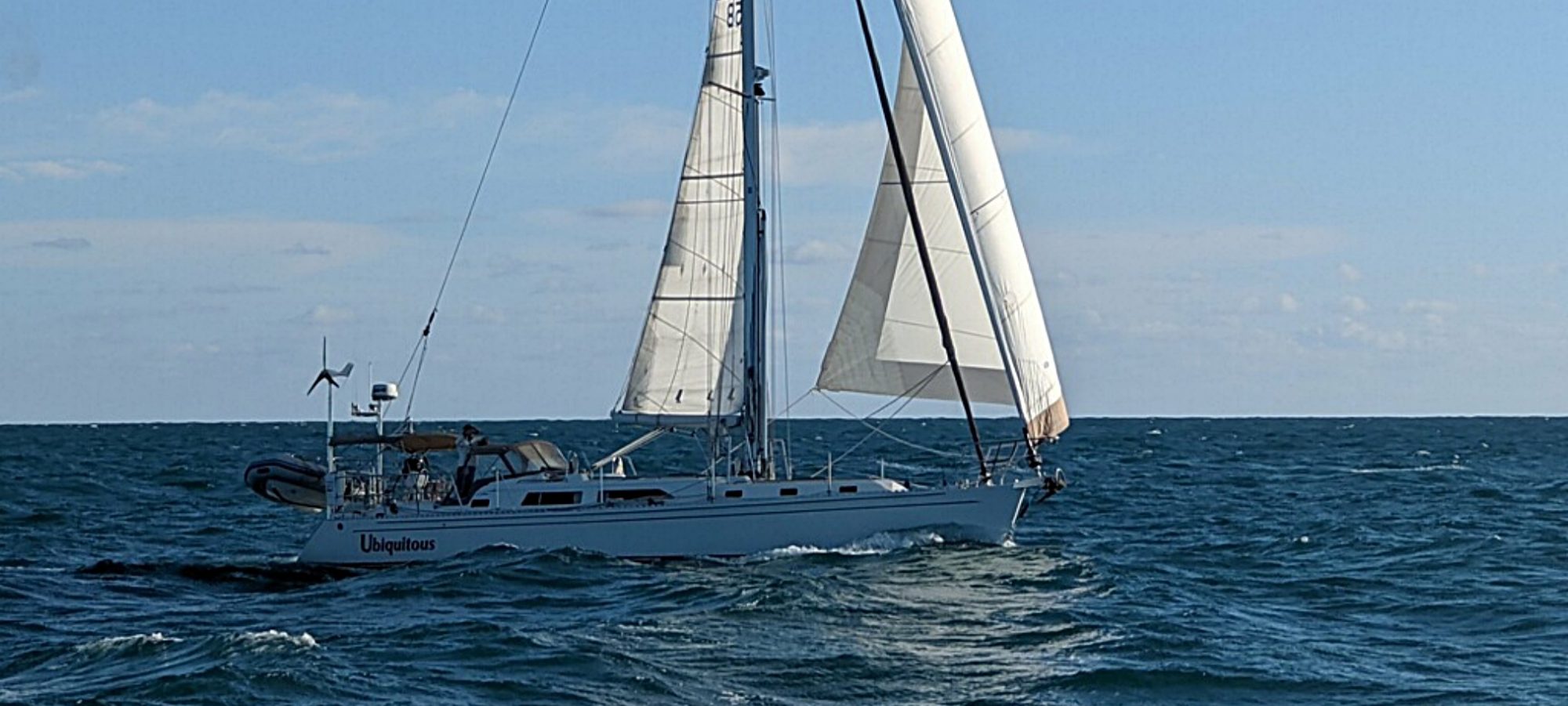
Get ready for it to blow!  These weren’t super heavy winds but they were on the nose and had Plaintiff’s Rest really heeled over during the second night and day of our voyage to Cuba.  Our Niagara 35 proved she was up for the task though, practically sailing herself across the Gulf.  Follow along as we share some storm sail tactics in here as well: rigging up of the inner forestay, setting the second reef in the main and checking for chafe on the furling lines.  Hope you all are enjoying the Cuba Voyage series!

When to Wake the Captain

At the first moment you think you should.  That’s probably what any captain will tell you.  As much as he likely abhors that first jolt—when the shout of his name or a shake of his shoulder rouses him out of a deep slumber—the second moment, when his mind clears and he realizes your intent in waking him is because you sense danger—real or merely perceived—he is grateful.  A well-intentioned, albeit false alarm wake of the captain is welcomed one hundred times over a skittish hesitation that makes it too late for him to salvage the situation.  I can only hope I speak earnestly on behalf of most captains, as I have not served as one myself, merely as a relief captain here and there.  I have never been the person, the only one fully responsible—at all times—for the safety of the boat and crew.  That’s quite a responsibility.  I can speak, however, as the first mate who has woke the captain both too early (i.e., unnecessarily) and too late.  All lessons are free today.

“If the CPA is less than five nautical miles, wake me up.”

This was the “too early” incident.  Phillip and I were sailing across the Gulf to Cuba, sharing helm duty during the day and each taking two-hour shifts at night.  Aside from the monstrous dredging vessel we squeezed by in the Pensacola Pass, we hadn’t seen many ships the first couple of days and nights on passage.  This was night number three, however, and we were crossing the large shipping channel where many carrier ships make their way into the Gulf and across to Texas.  We had already had to watch, call and maneuver around several big vessels during the dark evening hours before our night shifts began, so I asked Phillip before he went below to lay down around 10:00 p.m. when he wanted me to wake him if we began approaching another vessel while he was sleeping.

wake

Could I have monitored our CPA alone, haled the ship and/or deviated course if necessary to avoid a collision?  Very likely.  So, why did I ask for specific instructions?  I’ll admit I like my role as first mate under Phillip.  I would rather be the one following instructions, than making them myself.  That may sound lazy or meek and that’s fine.  I will be the first to admit I do not enjoy the stress of being solely responsible for the vessel or our navigational decisions.  I like sharing those duties with Phillip as captain.  While I will hold the helm as long as necessary for Phillip to sleep, I do so with the comfort of set parameters to follow in case a situation arises, the decision for which exceeds my pay grade.  The decision in this case was what to do if our closest point of approach with an oncoming vessel dropped below five nautical miles.  That was when I was told to wake the captain.

I had been watching him for about a half hour.  He was a bright beacon, a blazing battleship on the horizon, easily visible and definitely far enough away from us to not cause any danger—at the time.  I had learned from Captain Ryan with SailLibra during my voyage to Isla Mujeres that you can use the CPA (closest point of approach) on the AIS to determine whether you are going to cross the ship’s bow or stern by turning your heading toward the vessel’s approach (meaning, turning your vector line toward the oncoming ship) to see if the CPA increases or decreases.  If you turn toward the ship and your CPA decreases, you’re going to cross the ship’s bow and that’s when you need to worry.  If it increases, you are going to sail behind the ship’s stern and you are likely safe.  You can turn back to your heading and you should be able to watch the CPA continually increase and take comfort in your approach.  If you cannot turn enough due to the wind angle (or the CPA is too erratic) to allow you to make a clear determination that you will cross behind the ship’s stern … better pick up the VHF and give him a call.

Here is a sample screen shot of AIS.  You will see the vessel receiving AIS on the left and the oncoming vessels on the right, showing their approach (i.e., their heading) and CPA.  This looks a little different than the AIS screen on our Niagara but it will give you an idea.  I apologize I don’t have a good image of ours.  Turns out, when a ship is coming, thinking about filming the AIS screen is the last thing on your mind:

screen-shot-2017-01-10-at-3-15-27-pm

Ryan’s rule is a great theory and it does work, but some vessels are not charging ahead on a constant heading.  Some bob and bounce around in the waves.  Some stop to drop fishing lines in the water or check on their nets.  This means the CPA can sometimes bounce around erratically and not give you sufficient confirmation as to whether you’re going to collide with the vessel or not.  I hate when it does that!  And that is exactly what it was doing with this stupid bright beacon on the horizon, night three during our voyage to Cuba.

I had done what Captain Ryan told me by turning our Niagara toward Mr. Battleship and the CPA seemed to increase (although it was somewhat erratic, not constant), so I fell off again and continued watching as he crept toward my bow about eight nautical miles out (or so I believed as we do not have radar on Plaintiff’s Rest).  I believed he would cross safely in front of our bow and we would pass behind his stern, but I wasn’t 100% sure.  I tried to hale him on the radio for my own comfort just to make sure he could see me and let him know that I was under sail (which in theory means the ship under engine power will divert if necessary to avoid collision).  But what happened?  He didn’t answer.  Three times he did not answer.  Ryan did tell me this can happen often because many commercial ships have to log a radio call and make a report of it and sometimes they’re just lazy and don’t want to do that. In that case, if they see you and know they’re not going to hit you, they will just ignore your weary cries.  Of course that doesn’t give YOU—the poor little bobbing sailboat out there—any comfort, but it just happens sometimes.  And, of course it was happening to me on my shift!  I was cursing the ship channel Gods!

As I mentioned, I was fairly confident this Kiratzatsoo (or something like that I swear, a very hard name to say three times in a row on the radio) was going to cross our bow and we would sail safely behind his stern but the CPA was very finicky and dipped a couple of times below five nautical miles.  What did that mean for me?  You got it.  Wake the captain.  Even though I felt I knew we were safe (I knew!)—and when I did wake Phillip because I had been instructed to do so and we both watched as the ship moved safely across our bow and we sailed safely behind its stern, I did not apologize for waking him.  Why?  Because I knew I’d been given orders to follow and I should never trust my own judgment over the captain’s as to when is the right time to wake him.  How did I know this?  Because I had breached this sacred command before.  I’m not proud of this, but I share it because it is a valuable lesson to learn.  Your knowledge, pride or even fear and embarrassment about waking the captain should never come before a very clear order you were given on when to wake the captain.

It was on the Naples delivery, my spur-of-the-moment invitation to crew on the delivery of a Leopard 48 from Pensacola to Naples, FL under a very good friend of mine, Captain Jack.

jack

It was an awesome adventure, an honor to be included and an opportunity I will forever be grateful I was able to seize.  And while I believe (and hope) I served as a valuable contribution to the crew, I do know I made one could-have-been-very-bad mistake.  That was not waking the captain soon enough.

We were holding two man watches during the delivery.  Two hours, two crew at the helm, with the captain floating.  It was around 5:00 a.m., our first night on shifts.  I was supposed to be on with my buddy Bill.  Bill was sleeping and I felt energetic so I propped myself up at the helm with the plan to let him sleep another hour before waking him.  Looking back on it, that was probably an unwise deviation from the captain’s orders as well.  If he wants two men on shift, don’t try to be the hero and hold watch alone.  Wake your partner.  While two-man shifts was an indirect order, Captain Jack had also given a very specific order:

“If a ship comes within 6 nautical miles on the radar, wake me.”

screen-shot-2017-01-10-at-3-28-47-pm

That’s a pretty clear instruction, right?  You’re right.  It is, and it should have been followed.  I was holding alone around 5:00 a.m. and I saw a ship coming toward us on the radar.  The Leopard did not have AIS, but having used radar extensively to “acquire targets” via radar during the Atlantic-crossing with Captain Yannick, I felt pretty comfortable using the radar to watch oncoming vessels.  However, Yannick typically kept the radar set at 12 nm miles out and (my first mistake) I assumed this one, on the Leopard, was on the same setting as I was watching the ship approach.  Lesson #1: I should have looked more closely at the nautical mile ruler and I would have noticed it was set on 8 nm.  So, ships were actually closer than they appeared.

It was difficult to tell which way the ship was going as I did not have an AIS vector or heading to confirm its direction.  I was looking intently at the ship itself for a red or green nav light to tell me which way the ship was heading.  It was off my starboard bow, so I knew if I saw a red light (on its port), that would mean it was coming toward my bow.  A green light would mean it was headed away from me.  I repeat these things to you now as these are the things I ran through my head three times over to make sure I had them right (“port is red, starboard is green, port is red, starboard is green”) thinking this entire time I’m being very careful and doing all the right things.  Poor Annie.  Because what have I yet to do?  During all of these critical tactical moments?  I’m sure you know the answer, but humor me a little longer.

A few moments later, Bill wakes up.  I ask him to come quickly to the helm to get a second look at what I’m seeing and gather his thoughts.  While this is good practice, when there is plenty of time to react, I’m sure (and I hate to admit this, but it’s just likely true) I likely did this as well because I was the only female sailor aboard, one of the least experienced, and I wanted a second opinion before I … you know what.  This is precisely the reason I’m sharing this story.  Do not let your pride or nerves cloud your decisions out there.  Bill squinted and looked and clicked and few things and then we both saw it: a red light on the oncoming ship, which was now well within 6 nautical miles of us, likely closing in on five at that point and aiming to cross our bow.  “Go wake Jack,” I told Bill.

While it did afford Jack *just enough* time to quickly jump to the helm, assess the situation and fall off so we could clip behind the ship’s stern, it shocked me how long it took for that maneuvering and a safe passing to occur.  In my indecisiveness and attempts to assess the situation myself, I ended up giving Jack just enough time to react quickly and correctly.  That’s not the kind of margin any captain wants!  They want plenty of time, which is why you should wake the captain when?

I hope you all said it out loud.  At the first moment you think you should.  Trust me, he would prefer too early as opposed to too late to take the helm and save the ship.  Stay alert, follow orders and sail safe out there crew.  More Cuba footage, stories and lessons to come.

cp11

#89: Cuba Voyage I: Cast-off!

And they’re off! Plaintiff’s Rest is finally headed south for Cuba. Follow along as we cast-off the lines (finally!), make good way our first night under sail, get used to the new hydraulic auto-pilot, hand-steer just for fun (that wouldn’t last) and pass our first ship in the channel using the new AIS. Any questions about the new systems (Navionics, the auto-pilot and/or AIS), feel free to leave them in a comment and we will respond as soon as we get back ashore. The winds will find us next time on this voyage, but our first leg of the trip was a nice downwind run. Stay tuned for a wild, windy romp part two of our Cuba Voyage at www.HaveWindWillTravel.com and follow on HaveWind’s Facebook page for Delorme posts while we are underway. We shove off from the Keys for Pensacola this afternoon!

Are the Cubans Poor?

If that’s your question, I have to ask you:

How Do You Define Poverty?

unnamed

I think that will tell you a lot about whether you will enjoy Cuba.  I will admit, I did not know much about this intriguing country before I came.  Not near as much as I should have, at least.  I am notorious for wondering wide-eyed (and naive) into a new place, city, even country, without knowing very much about its history, geography, or customs, particularly when I know I will have Phillip alongside me every step of the way.  I hate to call it lazy but it is a divine way to travel as he likes to research, read up, plan and book our lodgings, outing and reservations and me?  I like to go!  Anywhere and everywhere and eat, see and experience it all.  Other than the very general parameters of staying moderately active and healthy in the process and partaking in the most ‘local’ experience possible, Phillip knows I am “up for” just about anything so, in this regard, we travel very well together.  This partnership, however, does occasionally leave me in a stupefied surprise when I stumble into an environment I did not expect.  Cuba did this to me.  In the best way possible.

I knew it was a socialist country and, while being educated, I will admit I did not quite understand the depth to which that singular political decision made these peoples’ lives so very different, as an American, from my own.  I saw socialism in my mind as ‘sameness.’  It reminds me of one of the very first books I remember actually reading, The Giver. Everyone in the society has virtually the same things.  They are provided with the same amenities, similar homes, cars, food and provisions so that their basic needs are theoretically taken care of and they do not covet their neighbor’s salary, home or social position.  In theory, it has its benefits.  There is no “competing with the Jones’,” there is no jealousy or vast discrepancy in land ownership or wealth.  In hope, there is no imbalanced wealth nor unfair poverty.

When you walk the dirty, crumbling streets of Jaminitas—the small neighborhood near the marina, where Phillip and I walked often for lunch or dinner and which quickly became our favorite venue while in Cuba—one word would likely immediately come to mind: poverty.  The age of their clothing (likely handed down and down and down and on its fifth year of daily wear), the holes in the curtains, the dinghy dogs roaming the streets, the threadbare sheets you can see on the cots in their living rooms which you can see from the street, you would probably immediately think they are poor.  And they are, compared to our standards.  Phillip and I learned a typical wage for Cubans who work as, say, auto mechanics, janitors, or construction workers is about 20 cucs a month.  That equates to about $24 a month.  Twenty-four.

But, you have to remember they do get rations every month—a generous portion of beans, rice, bread and meat every day.  They have free health care, free education, free housing and much more.  Are these the same houses that we can see all the way into from the street because they are only about three hundred square feet in size?  Yes.  But they don’t pay rent.  After factoring that in, and learning that a very filling, enjoyable meal for Phillip and I both including a bottle of wine at a nice family’s back patio cost us only 11 cuc, you start to think maybe they have what they truly need, at least as far as amenities, food and shelter goes and they don’t “want” as much as a typical American family does.  They don’t crave “things” as much.  At least I don’t believe they do.  What I did see as I walked what any typical American would call very poor streets, dodging dog shit, wafting away black clouds of car fumes and saying “pardon” left and right for the dozens of people that constantly passed by, was enjoyment.  The children were playing ball, pushing scooters and laughing.  The teenagers were incessantly flirting and cuddling in corners.  The adults were often arguing in jest but often laughing as much as the children and constantly talking and checking in on one another.  It seemed everyone’s lives were accessible to one another.  There was no shutting of yourself in a room with an iDevice and ignoring the outside world.  The “it takes a village” philosophy would definitely apply here as they all live their lives in the open and among one another.

What I did not feel was scared.  We walked some very dark seemingly seedy streets at night trying to find some of the little “back patio” restaurants new friends we had met had told us about.  We were often lost, wandering and passing by strangers in the night.  In many cities in the states, walking streets like that after dark, I would have been a little frightened, particularly in a neighborhood where Phillip and I would be such obvious standouts.  One of the things I hate about being in an area like that where my clothing or accent or skin color makes me an immediately recognizable ‘tourist’ there is the stare you often get from the locals.  They watch you walk by, following every step, daring you to make eye contact to start something.  Their glare makes you feel like you have something they want and they might just take it from you.  I never felt that in Cuba.

Phillip and I were often easily the whitest people on the street, with the cleanest clothes and pockets full of more cucs than many of the Cubans make in a year and they could care less.  Many didn’t even look at you.  They were too busy in conversation, laughter or buying some fruit to worry about a tourist walking by.  Those that did meet your eye would often say “Hola,” or “Buenas.”  The chance Canadian friend we made our first day in Cuba who lives in Jaimanitas three months out of the year and who served as an excellent tour guide for the area, told us “Cuba is the safest country to visit” because the very harsh punishments for crimes serves as an excellent deterrent.  While I haven’t visited enough countries to say whether that is true, I can easily say on the dark streets of Cuba, which easily look quite sinister, I felt safe.  It is a feeling you have as you walk by the locals that they are not sizing you up.  They are often not interested in you at all.  

By American standards, they likely easily qualify as “poor” but they don’t give you the feeling that they want for much, in the way of things that is.  This speaks nothing for the liberties they desire, the freedoms we Americans are so easily afforded and take for granted (such as the ability to travel, write, earn, etc.).  These liberties, however, are not something they can take from you or that you can provide, so it is not something they look to you for.  Rather, as you walk among them along what appears to be poverty-ridden streets, wearing, carrying or holding many things one would assume they do not have and would likely want, they simply smile or greet you as they pass by.  “Adios!  Buenos noches,” the children shout as you leave.

img_0400img_0443 img_0425 img_0406 img_0403  img_0383 img_0389 img_0399 img_0423 img_0398 img_0381 img_0380 img_0378 img_0375

#88: 30 Days Across the Atlantic (Season Five Premiere!)

Friends, followers, Merry Christmas and Happy New Year from HaveWindWillTravel!  A real treat for you here, available for the first time to my entire audience: my two-hour movie from our trans-Atlantic.  For those of you who are new, Phillip and I had the good fortune to be invited as part of a four-member crew to cross the Atlantic, sailing from Florida to France, this past June on a 46’ catamaran and I created my first full-length film documenting our journey.  I thought it would be a great way to kick off Season Five of our YouTube channel which will be all about our TRAVELs, with our biggest voyage of 2016!

When Captain Yannick first met me (which was around the same time he agreed to let me make this tremendous voyage with him, brave guy), he had no idea who I was really, the kind of videos I made, my audience or how I might portray him and his family on film and, because he has plans to produce video documentaries of his own someday, he initially asked that I not share the movie publicly on YouTube.  Now, after having watched many of my videos, particularly the movie itself, and with a better understanding of the purpose of my platform (to help share the realities and rewards of a cruising lifestyle) Yannick graciously granted my renewed request to let me share it with my entire audience, for free on YouTube.

So, kick back, make some hot cocoa, round up the last of the Christmas treats and enjoy the show while Phillip and I explore the vast historic castles, churches and smoky cigar holes in Cuba and work to get videos to you all from this incredible adventure as well as my sail to Isla Mujeres, Mexico this past November and our upcoming sail to Miami in February for the Miami Boat Show (we hope to see some of you there!).  Thank Captain Yannick for inviting Phillip and I on this incredible voyage and letting me share the experience with you: a crew of four on a 46’ foot catamaran, thirty days at sea across the Atlantic Ocean.  The perfect way to kick-off HaveWindWillTravel 2017!

HASTA LUEGO!

This is it!  Our official goodbye.  We are out!  Off!  Headed to Cuba!  See you next year.  Phillip and I were dreaming about this moment every day at the shipyard, every time we encountered a new problem, found a new leak and had to break out another thousand.  It all lead to this.  We are sailing to Cuba.  We’ve spent months preparing, researching and packing and we have had a great time sharing the process with you in Season Four of the YouTube Channel in our “How To” series.  We don’t know when we’ll get wifi again or have time to put out our next video.  It may be a few weeks.  But Season Five will be all travel.  We’re taking you with us in videos to Isla Mujeres, Cuba, Key West, Miami and more.  Stay tuned and Happy Holidays Sailors!

cuba

And, as our continued thanks for all of your support and following along, we put together one last season finale for the YouTube channel talking about and showing you all of the safety gear we will be traveling with and covering our last minute checks (including one unfortunate discovery and repair of a raw water leak) before shoving off.  As always, we hope you find the information helpful (and fun!) and enjoy following along on our journey.  Stay tuned on HaveWindWillTravel’s Facebook page for updates via our Delorme tracker while we are underway.  Wish us luck and fair winds and have a fantastic Christmas!

For any of you looking to do your own offshore voyaging, I have included below a link to our complete 12-page bow-to-stern inventory of the boat in case this sparks some ideas for you of what to stock, how to stow it or how to organize it.  Included in here is all of our spares, boat supplies, food, fishing gear, safety gear, etc.  Plaintiff’s Rest is loaded down!

PLAINTIFF’S REST INVENTORY — CUBA 2016

boat-diagram2

inventory-pic

And, another Christmas goodie for you!  I wrote an article about our rotten stringer repair that will be coming out in the January 2017 issue of SAIL Magazine.  It gives me a tingle to think how everything is so connected and truly happens for a reason.  It was October 2015 when we watched a fleet of boats sail out of the Pensacola Pass in the Pensacola a la Habana Race and, when we saw a gallant 60-footer pass by that, Phillip and I decided–right then and there–we were going to make a plan to sail ourselves to Cuba.  We didn’t know it at the time, but it was Captain Ryan on Libra and we’ve all since become very good friends and I now have a new marketing client who I love to work for (he pays in offshore voyages ; ) … is there anything better?)  And, it was the very next weekend after we made that decision (Blue Angels November 2015) that Phillip and I found our rotten stringers.  But, Phillip decided–right then and there, with the knife blade still sticking out of the wood–that it wasn’t going to stop us.  We would haul out, do the repairs, re-rig at the same time and SAIL TO FREAKING CUBA!  It actually motivated us further and because it was so much work getting our boat ready to go, the reward is that much sweeter.  And now, right before we shove off, the story of the whole incident comes out in print for you all to read while we voyage.  There is sometimes a mystifying symmetry to life that takes my breath away.  The good, the bad, the rot.  It all happens for a reason and always teaches you something in the process.  Never give up!

article1 article2

#86: How to Provision & Prepare Your Boat for Passage

Provisioning for passage.  Stowing goods on the boat (according to weight).  Power conservation while underway.  Watch schedules.  Sleep arrangements.  You name it.  A ton of good, hopefully helpful info for you all while we are preparing our boat to shove off for Cuba in just SEVEN days.  Feel free to add any of your own offshore preparation tips in a comment below and follow us along on our voyage on our HaveWind Facebook Page where we will post MapShare updates and our GPS location via the Delorme.  Become a Patron for personal messaging capabilities so you can talk with us during the voyage, get up to date photos and video posts as soon as we get wifi and join us in Key West for a Patron Party when we get back from Cuba.  Oh the stories we will tell!

Why We Travel

“There’s something magical about the Azores,” Phillip told me well before we stepped foot on Andanza to cross the Atlantic.

img_2223

When the idea first started to flick like a candle flame in our minds that we might sail across an ocean this year, Phillip immediately started to overflow with what little he knew about the places we might see along the way: Bermuda, the Azores, Peter Sport Café.  Now, this was long before we knew Yannick did not plan to stop at any of these places.  Not a one.  But it didn’t matter.  While Phillip and I love to see new places and explore new shores, we also love the journey in between.  Simply crossing the ocean was enough for us, but Phillip and I are both so grateful that things worked out the way they did and we had the opportunity to spend nine colorful, captivating days in that magical place known as the Azores during our voyage across the ocean.

Discovering new places, people and cultures by venturing off the main thoroughfare down obscured alleyways, in rumbling rickshaws lead by locals who have walked those roads barefoot since they were a child is why we travel.  I expect to feel the same kind of wanderlust awe as we traverse Havana, watching old Chevies putter by, following puffs of smoke from women on a balcony, wandering around with my mouth hanging wide open because I’ve simply forgotten all about it in my wonderment.  That sounds a little Alice in Wonderland but that is how I feel when we step onto a new shore: exuberantly overwhelmed and proud to be just mad enough to have embarked on the journey I did to get there.

Would you tell me, please, which way I ought to go from here?”

“That depends a good deal on where you want to get to,” said the Cat.

“I don’t much care where–” said Alice.

“Then it doesn’t matter which way you go,” said the Cat.

“–so long as I get SOMEWHERE,” Alice added as an explanation.

“Oh, you’re sure to do that,” said the Cat, “if you only walk long enough.”

maxresdefault

Where do you want to wander to?

As Phillip and I spend these last days preparing for our voyage to Cuba, my mind for some reason keeps traveling back to the Azores.  Probably because it, too, was a place where I could have never imagined myself because I simply could not imagine it.  I couldn’t see the colors, the lushness, the curiosity of the birds that ate my bread crumbs until I had actually been there.  It was even more magical than Phillip could convey and I thought I would take a moment to share it with you as I believe the culture and untouched parts of Cuba will strike us the same way.

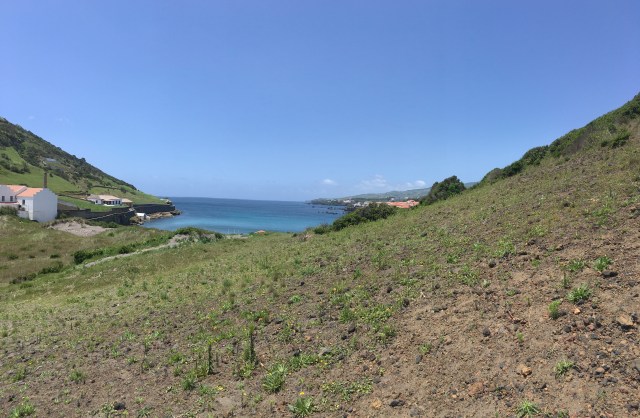
Azorians wake every day to the sight of the Atlantic Ocean.

img_2107

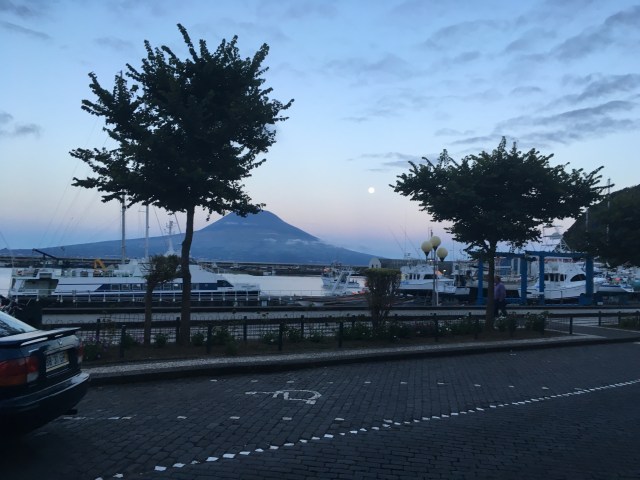
The peak of the Pico, basked in pastel looks upon us on the island of Failal.

img_1927

Each day began at this colorful café over coffee,

img_1844

and often ended with wine at the same table.  I love the ever-changing view from my office.

img_1877

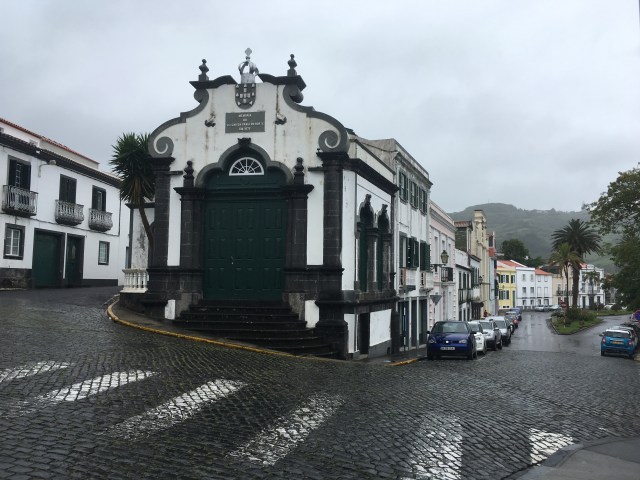
Cobblestone streets and centuries-old buildings scale the steep hillsides.

img_1968img_2417img_1995

I stumbled upon this while walking the streets one afternoon alone, a local wedding, held in the back patio of a home.

img_2426


The sea wall, with its many ship’s badges and boats, is a nautical museum.

img_1984img_2031img_1799 img_1803

Yannick, chatting with a French family cruising on their Ultramar as the father added their emblem to the seawall.

img_2035

There is a feeling of connection when you find badges from fellow sailors who have come before you, s/v Testarossa which won the ARC Europe 2016 race and the infamous Pam Wall’s Kandarik which came through in 2006.

img_2007img_2403

I found beauty everywhere.

img_2415 img_1915img_2423  img_2048

Final resting place overlooking the vast Atlantic.  I don’t think I would mind ending up here.

img_2420

En route to the farmer’s market where we brought fresh produce each Tuesday, fresh fish on Fridays and a fresh baguette every day.

img_1862 img_1960img_1970

Every meal was a delicacy.

img_2370img_2268

But don’t get me started on the cheese.  I could a do an entire post about cheese in the Azores.  It was all made locally from the very cows you see roaming the hillsides.  Each island made their own special breed and blend of cheese and cheese came to your table, no matter where you went, moments after you sat down.  Ahhh … the cheese.

img_1931

Voted, hands down, our favorite meal in the Azores: Octopus Salad drizzled in lemon, oil and fresh cilantro.

img_2372

The best way to spend your day?  Simply go for a walk.  Explore.  See.  Soak it all in.

img_2093  img_2124 img_2139 img_2263 img_2307 img_2376   img_2344 img_2087

You see?  Magical.  I don’t know if I will ever find myself again, in a cloud.

img_2226 img_2384 img_2389

This was a moment that stuck with me.  We often stopped at this little cafe on Porto Pim and this man was there every time, nibbling on cheese and bread and just watching, everything, everyone, quietly.  He was such a fixture at the place, the birds would come up and eat out of his hand.
Peter Sport Café.  What can I say?

img_1935

Peter Sport Café was a destination all its own.  There is an energy in that place that fills your lungs when you walk in the door.  You know you’re breathing the same air a thousand other sailors drew in before you having themselves just crossed an ocean to get there.  Respect—for each other and for the ocean—resonates with every man’s eyes you meet.  And when you and your crew come in to the Café for the first time, having just docked your boat on the historic seawall, pulling off hats, wiping salt from your brow, slapping each other’s shoulders, you make a bit of a scene because you’re energized by what you have just accomplished.  The folks who come there every afternoon for a beer or the folks who have been in the Azores for weeks, likely having work done on their boat, can spot you instantly: the crew that just made it in.  But, once you stay a few days and have a few beers there, you will start to blend into the regulars and you’ll smile when you see the next motley crew of sailors, walking in for the first, slapping shoulders and pulling off hats.  Congratulating your crossing with a drink at Peter Sport Café is a memorable experience.

I hope the first drink Phillip and I have in Havana brings me the same air of comradrerie with people there who have rich stories and experiences to share.

Sail with Us to the Miami Boat Show!

Very exciting video for you here guys.  Our 4th Gift of Cruising will be a five-day offshore adventure sail from Pensacola to Miami with us on s/v Libra to attend the Strictly Sail Miami Boat Show, boat show tickets included.  Super cool, right?  We will depart out  of Pensacola February 10th and sail to the show.  I will be speaking at the show (so you can come heckle me!) and Libra will be IN the boat show so you can come walk the docks, tour her and meet Phillip and I while you are there.  We will give this gift away at the $500 Patron reward level — help us make this happen by becoming a Patron and emailing me to let me know you are available during the passage dates and you want to go on an offshore voyage.  In addition, if you would simply like to go ahead and book this passage to make the trip with us, feel free at SailLibra.com!  We would be excited to have you!  Thank Captain Ryan with SailLibra for this generous donation as well as my many Patrons who make these Gifts of Cruising possible.  Get inspired.  Get on board.

Also, because it is the season of giving, I put together another full-length video for you all on the channel in our Boat Tours section.  It’s my first motor vessel tour!  I didn’t even know Gulfstar made motor yachts, but this one was certainly impressive.  Twin Perkins diesels, a generator, water-maker, 500 gallons of fuel, 250 gallons of water and insane amounts of storage.  Thank Phil for the tour of his 1979 Gulfstar 44, m/v After Five.  I blame all Video Annie comments in the outtakes on the wine he kept feeding me while I was working!  Enjoy the tour!

#85: How to Take Advantage of the Wind (Go Kite-Surfing!)

Coming straight to you from Isla Mujeres, footage from our very first kite-surfing sessions of 2016!  What can I say?  With the shipyard work and ocean-crossing, it’s been a busy year, but Phillip and I absolutely love kite-surfing and we seize any opportunity we can to get out, pump up our kites and take advantage of the wind (even when it means knocking a little kite rust off and crashing here and there).  Hope you all find a sport on the water that you enjoy this much.  Have fun kiting (and crashing) with us.